Lamborghini, the Italian sports car maker that we know and love for its roaring V12 engines, will debut a fully electric (EV) model. A whisper-quiet Lamborghini? Times have indeed changed.
But, before you start lamenting the loss of that iconic engine roar, rest assured that the first EV from the Sant’Agata Bolognese-based carmaker won’t arrive until 2029.

While an initial 2028 debut was planned, Lamborghini has adjusted the timeline for its first EV model, stating that the market for electric luxury sports cars isn’t quite ready.
“We don’t believe 2029 is late to have an electric car, in our segment, we don’t anticipate the market being ready in 2025 or 2026,” says Lamborghini CEO, Stephan Winkelmann. A dig at arch nemesis Ferrari, perhaps, who’s due to unveil its first EV next year.
RELATED: Hybrid-powered Lamborghini Urus, Huracan successor due in 2024, first EV in 2028

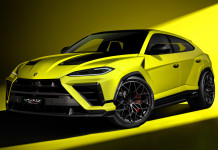
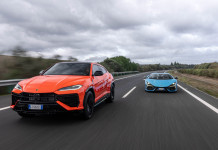
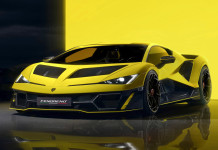
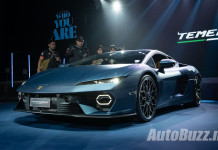
While its fully electric models won’t be coming soon, Lamborghini has already embraced electrification with its hybrid line-up, which currently includes the Revuelto, Urus SE, and Temerario, the latter being the newest addition of the lot.
Touted as the successor to the Lamborghini Huracan, the Lamborghini Temerario has a twin-turbocharged 4.0-litre V8 plug-in hybrid powertrain and three electric motors that deliver a combined output of 920 hp. This propels the Temerario to a century sprint in just 2.7 seconds and a top speed of 343 km/h.

Like Ferrari, the European Union’s 2035 ban on internal combustion engine is the main driving force behind Lamborghini’s push for electrification. However, a review of the ban – scheduled for 2026 – could prove to be a lifeline for the internal combustion engine.
In the meantime, Lamborghini is exploring synthetic fuels as a potential solution to preserve its petrol-powered heritage. “We think this is the right way to face the future, there are discussions around synthetic fuels and this is an opportunity for our kind of cars”, Winkelmann said.
RELATED: Lamborghini Temerario debuts as Huracán successor – 4.0L twin turbo V8 PHEV, 907hp