“Put up or shut up” was the line thrown down by BYD during the launch of its DM (Dual Mode) 5.0 technology earlier this year. Clearly, that rubbed Geely the wrong way and to put up, the latter is about to launch its new generation Geely Thor PHEV hybrid system.
The Thor PHEV system will be launched by the end of 2024 and the internal combustion component will deliver a thermal efficiency of 46%, combining with the electric motor for a total range of over 2,000 km and fuel consumption below 3.0 litre/100km.

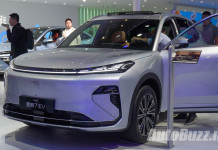
As for the first model to feature the Thos system, that should be the Geely Galaxy Starship 7 SUV, as indicated by a listing from the Ministry of Industry and Information Technology (MIIT).
MIIT information details a BHE15-BFN 1.5-litre engine with a maximum power of 111 hp, beating out BYD’s DM 5.0 and its 101 hp. The electric side of Thor will be powered by a lithium iron phosphate battery pack produced by either SVOLT or Sunwoda Electronic.

The Galaxy Starship 7 PHEV SUV will weigh in at either 1,724kg or 1,790kg, depending on the variant. Being a mid-sized SUV, the dimensions come in at 4,740mm long, 1,905mm wide, and 1,685mm tall, with a 2,755mm wheelbase.
Geely followed up its announcement on the Thor system at the 2024 World New Energy Vehicle Conference with more technologies on the verge of introduction.

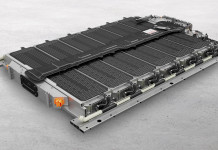
This includes claims of the world’s first ultra-high-performance drive motor test bench with a speed of up to 30,000 r/min. This covers voltage platforms from 0 to 1,200V aside from delivering high dynamic response, low moments of inertia, and improved test accuracy.Additionally, the Geely also has its latest generation Aegis Short Blade battery comprising lithium iron phosphate cells.
All in, Geely is charging ahead as a leader in new energy vehicle technology, clearly not shutting up and instead putting up a fight towards BYD.
Source: Fast Technology