Malaysia is set to start production of a homegrown high-voltage battery for electric vehicles (EVs), with production expected to begin as early as September 2026, Nikkei Asia reports.
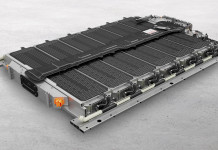
Reportedly utilising a nickel-manganese-cobalt (NMC) chemistry, the battery is enhanced with graphene to improve its storage capacity by up to three times compared to conventional graphite-based cells, though the exact commercial baseline battery used for comparison is not disclosed.
Manufacturing will be carried out by Gigafactory Malaysia, a facility not to be confused with Tesla’s operations. The operating company is a subsidiary of NanoMalaysia, which itself functions under the Ministry of Science, Technology and Innovation (MOSTI).

Developed at a cost of RM20 million, the 15,000-square-foot plant is located in Suria Industrial Park in Sepang. At full scale, the facility features a maximum capacity of one MWh annually, which amounts to 92,000 battery cells.
Initial small-scale commercial manufacturing is scheduled to begin sometime this month, with the broader megawatt-hour capacity output expected to follow at the earliest in September 2026.
NanoMalaysia Chief Executive Officer stated, “We are on the verge of operationalising Malaysia’s first local battery technology production factory.”
ALSO READ: All-new BYD Seagull grows much larger, ready for another showdown with Geely
The project is “likely the first of its kind in ASEAN. No other countries in the region are producing home-grown battery tech”, he was quoted as saying.
Rezal noted that the graphene-enhanced battery delivers a driving range of up to 640 km when fully charged and supports fast charging that tops up the unit in just 12 minutes under optimal conditions.
Other touted specifications for the NMC battery include support for DC fast charging and an energy density above 200 Wh/kg. Commercial orders are already underway; one local organisation has reportedly placed an order for a 25-kWh unit, while other deals are currently being finalised.
While no official consumer pricing was provided for the cells, local production is intended to directly lower the overall cost of downstream EVs by eliminating structural expenses like import taxes, logistics, and regional storage.
“Battery contributes at least 40% of EV cost,” Rezal added. “Both local and international EV manufacturers stand to benefit due to the above-mentioned advantages, thus making locally manufactured or assembled EVs significantly more affordable and accessible.”

Gigafactory Malaysia is also exploring a raw material supply pipeline for nickel with Indonesia alongside potential export channels to South Korea, India, and Pakistan.
“We are also planning for the long term, and considering that nickel is abundant in Indonesia, we are looking at a strategic partnership with them based on the [memorandum of understanding] signed with the National Battery Research Institute of Indonesia, for potential supply in bulk quantities, especially once we scale up to a gigafactory level,” Rezal said.
READ MORE: All-new Porsche Cayenne Electric previewed in Malaysia – potentially launching by the end of 2026