Malaysia has overtaken Thailand as the second-largest car market in Southeast Asia (SEA), placing us just behind Indonesia. This is according to a report by the Japanese online newspaper, Nikkei Asia, which compiled car sales data released by industry groups in Malaysia, Thailand, Indonesia, as well as the Philippines and Vietnam.
In the past, Malaysia has constantly been the third largest car market in SEA. However, things have taken a turn as Malaysia recorded higher car sales numbers than Thailand for three consecutive quarters, through the first quarter (Q1) of 2024.

According to the Malaysian Automotive Association (MAA), car sales in the country saw an increase of 5% in Q1 2024 from the same period in 2023 to a total industry volume (TIV) of 202,245 vehicles. This is followed by an 11% increase in 2023 to a record high of 799,731 units.
Among the factors that aided the boost in car sales in Malaysia include the sales tax exemptions issued by the Malaysian government for domestically produced vehicles between 2020 and 2022. National carmakers, namely Proton and Perodua, which held about 60% of the market share, benefited the most from the tax exemption.
RELATED: MAA: 799,731 vehicles sold in Malaysia in 2023, 11% up from 2022
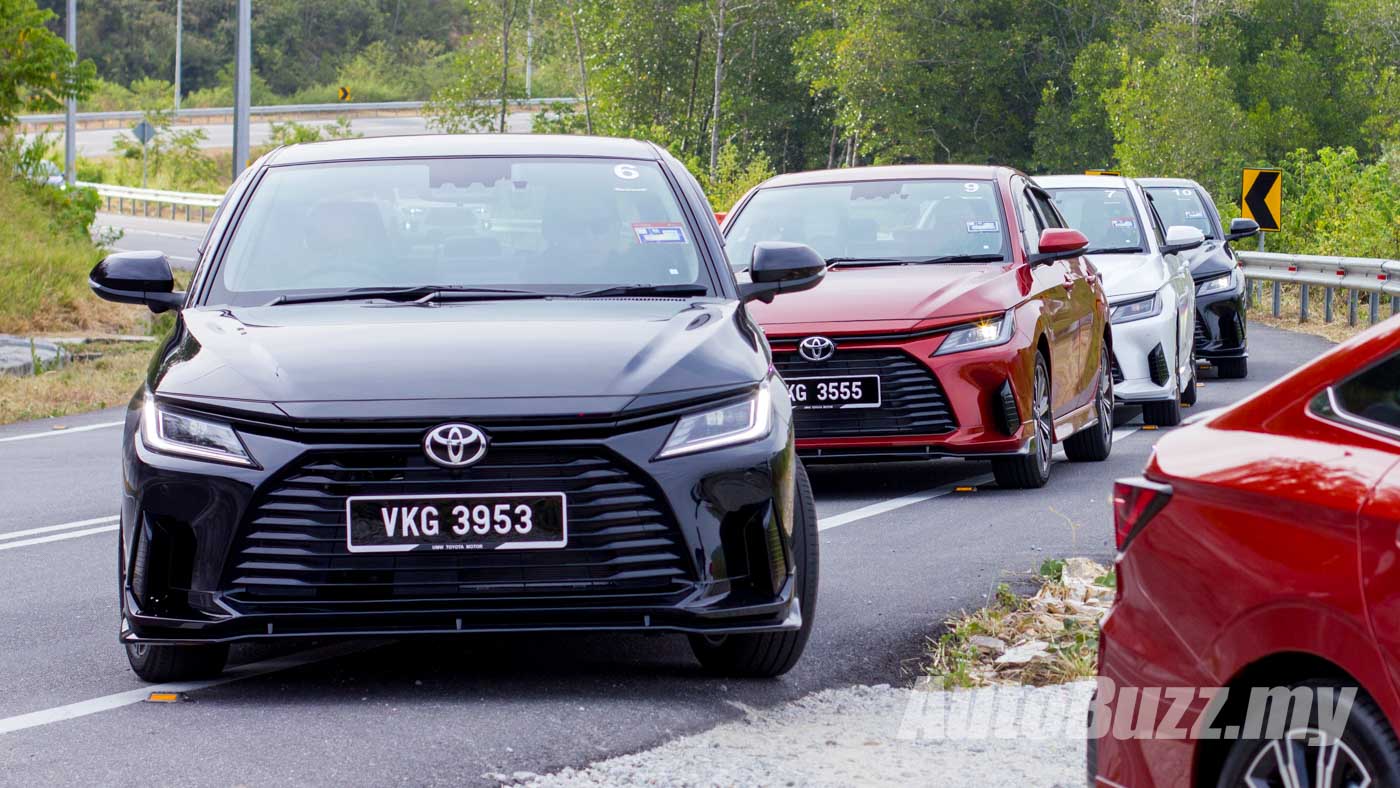
Ivan Khoo, a Toyota sales agent based in Kuala Lumpur, told Nikkei Asia that sales between January and February 2024 were more positive than what was expected. The Toyota Vios was the brand’s most popular model between the two months.
“I see both segments, for Toyota’s ICE (internal combustion engine) and hybrid cars, will continue to do well”, said Khoo.
Car sales in Thailand, on the other hand, have plummeted. The kingdom has been holding second place for car sales in the SEA for years but saw a decrease in sales by 25% in Q1 2024 as compared to the same period the year before.

Thailand’s monthly car sales have declined year-on-year starting June 2023. This is due to increasing nonperforming car loans and general stagnant consumption. The share of EVs in the kingdom’s vehicle sales has increased, however, thanks to the entry of Chinese carmakers.
Things aren’t as positive in Indonesia either, as car sales fell by 24% in Q1 2024 as compared to 2023. This is due to rising interest rates, which discouraged customers from making car purchases.
In 2023, Indonesia sold just slightly over 1 million cars, which is 4% less than in 2022 and 30,000 fewer than in 2019, before the pandemic took place. The 2023 sales figure is also 1.05 million fewer units than the target set by the Association of Indonesia Automotive Industries (Gaikindo).

Over in Vietnam, car sales have dropped by 16% in Q1 2024 from 2023. Among the reasons that contributed to the decrease in sales numbers include the nation’s domestic economy staying stagnant since 2023 due to sluggish exports and other factors.
The Philippines, on the other hand, saw an increase of 13% in sales for Q1 2024, which is the largest growth among the five countries. This is thanks to inflation having eased to around 4% in late 2023, contributing to strong consumer spending.

The automotive market in Malaysia is getting increasingly competitive, as more and more carmakers, especially from China, enter the market. With a middle class that’s constantly growing in Malaysia, subsidies and macroeconomic conditions are expected to play an important role in affecting car sales in our market.
Despite the sales growth, the MAA is predicting a 7.5% dip in TIV for 2024 in Malaysia due to various factors, including the consumers’ concerns over targeted subsidy rationalisation, high cost of living, as well as higher service tax rates for vehicle repair and maintenance. Despite this, sales for battery electric vehicles (BEV) and hybrid electric vehicles (HEV) are expected to grow. In 2023 alone, 10,159 BEVs were sold in Malaysia, which is almost quadruple the amount recorded in 2022.
RELATED: MAA: TIV expected to drop 7.4% in 2024, down to 666k passenger vehicles