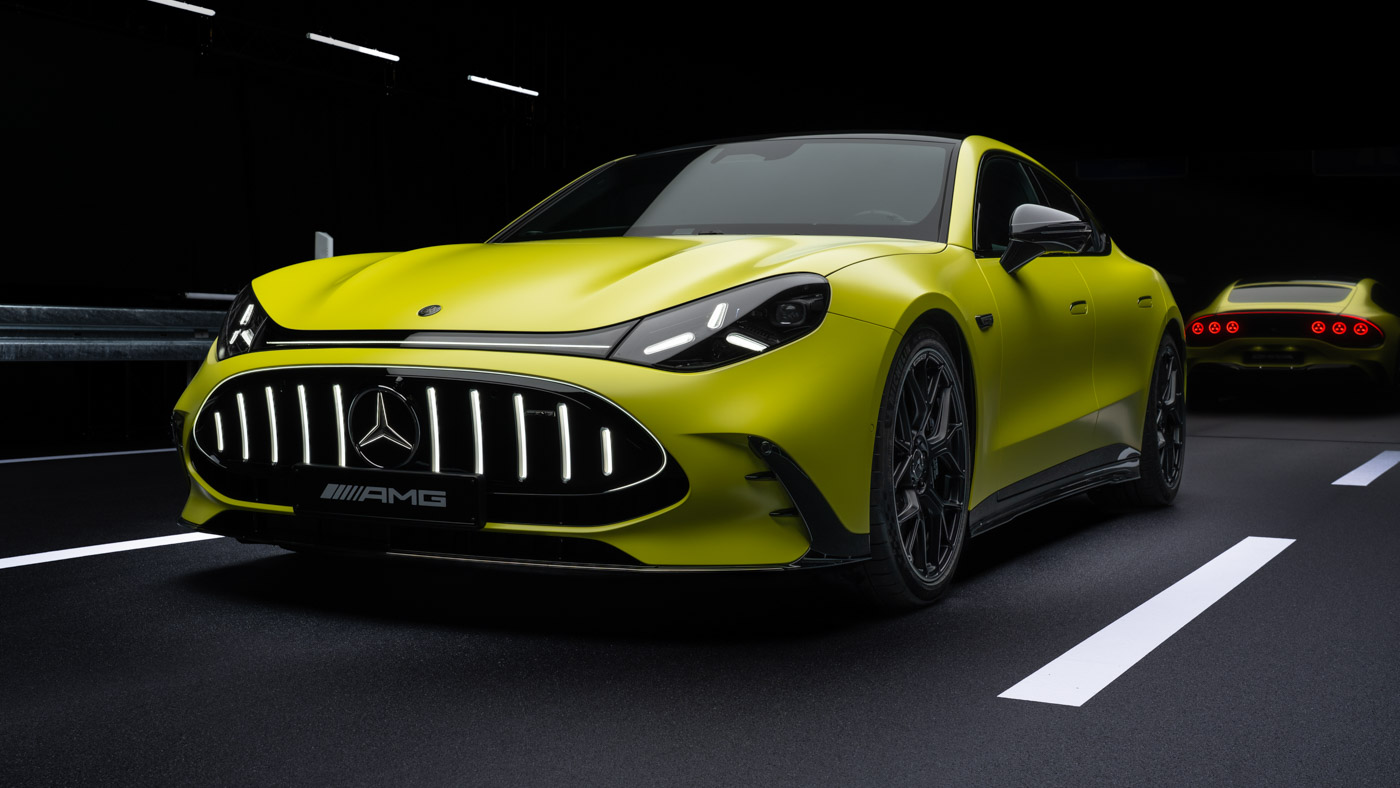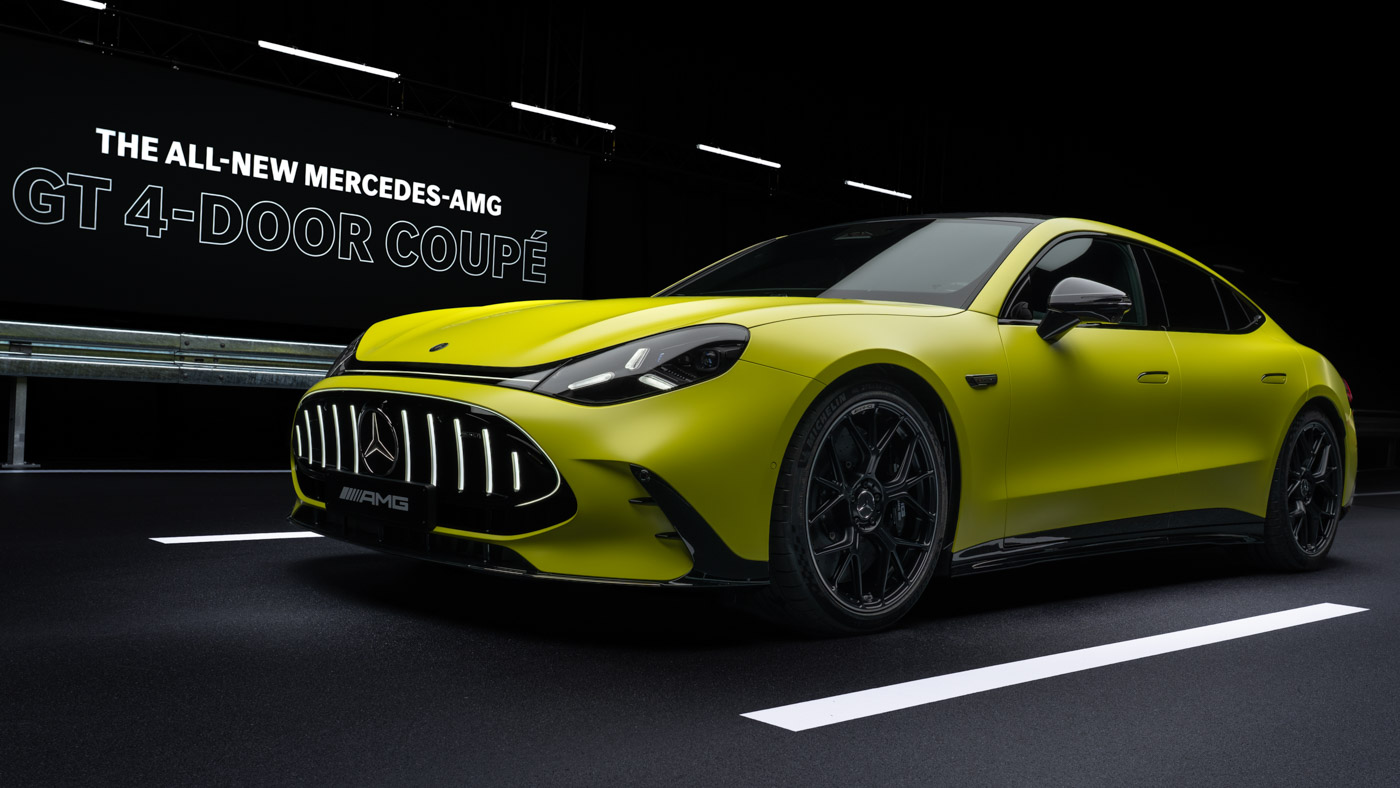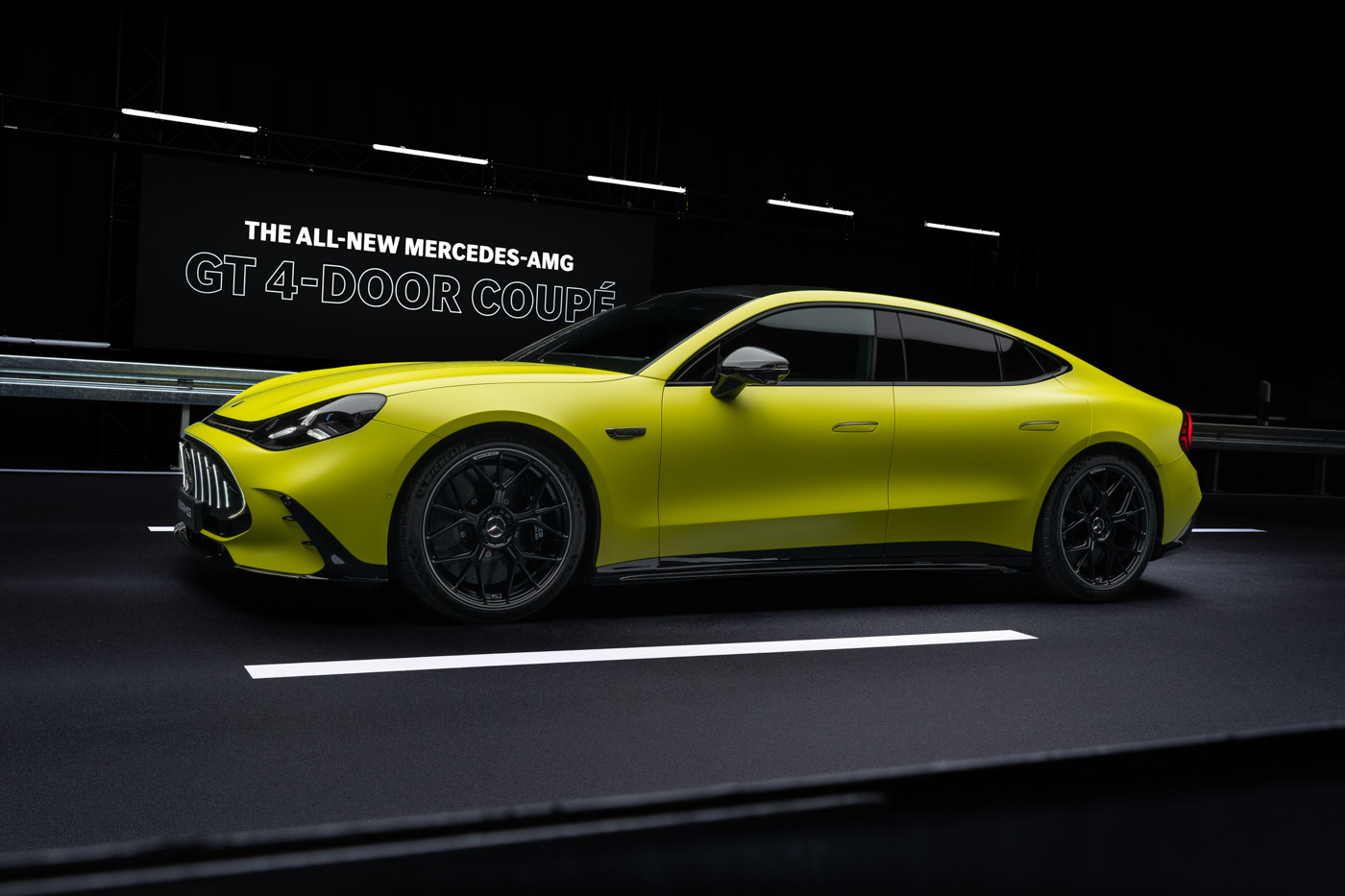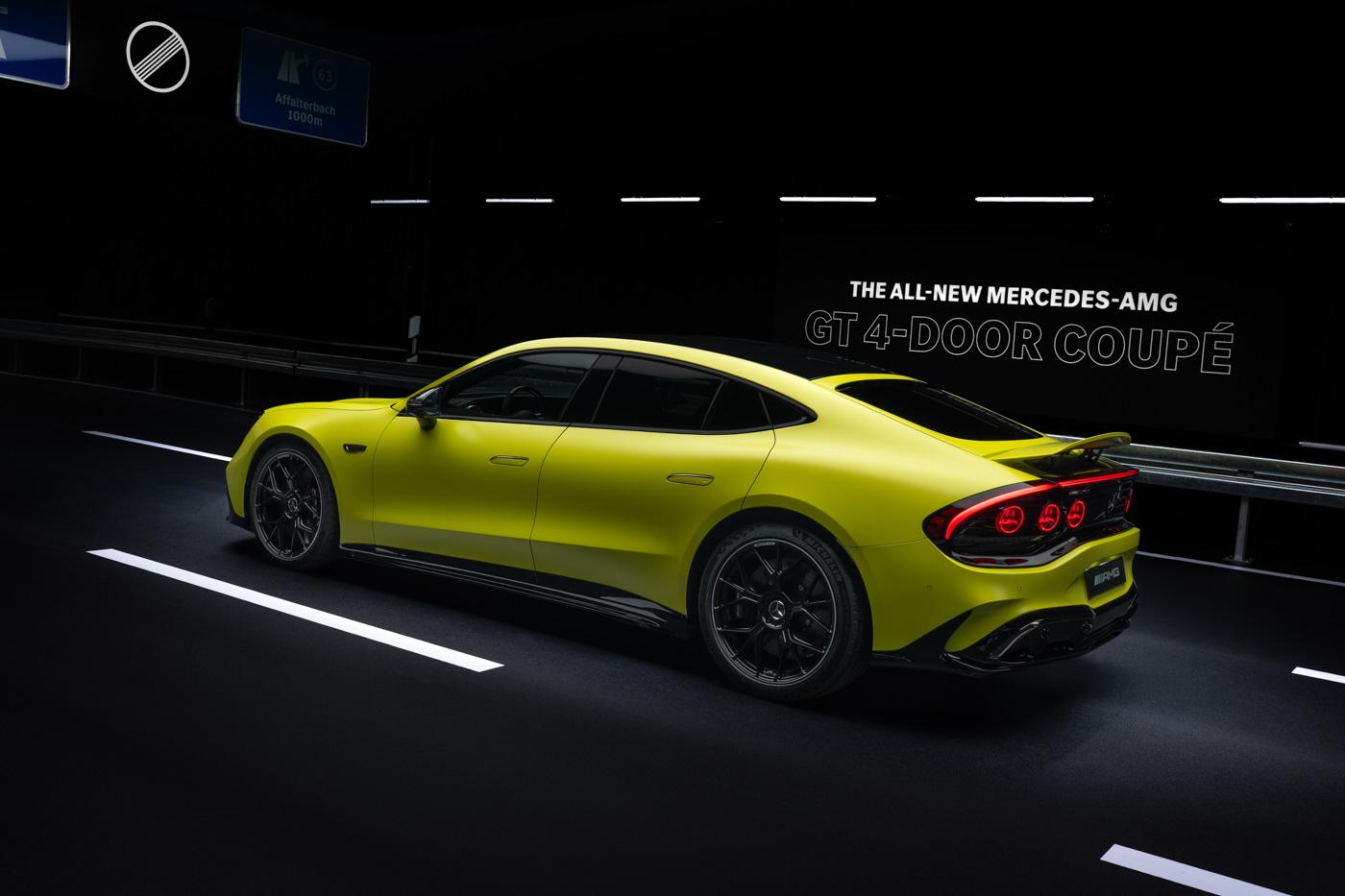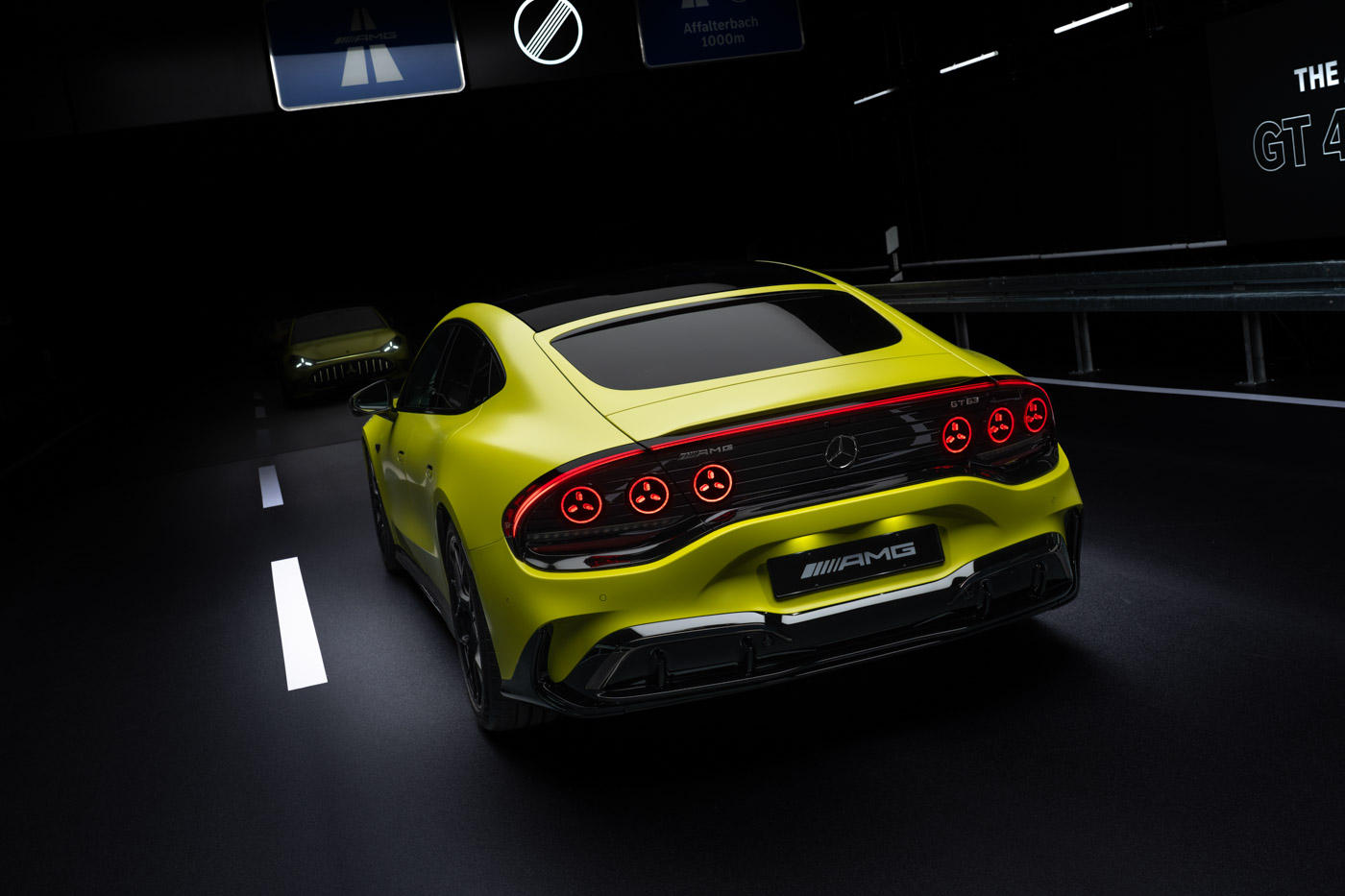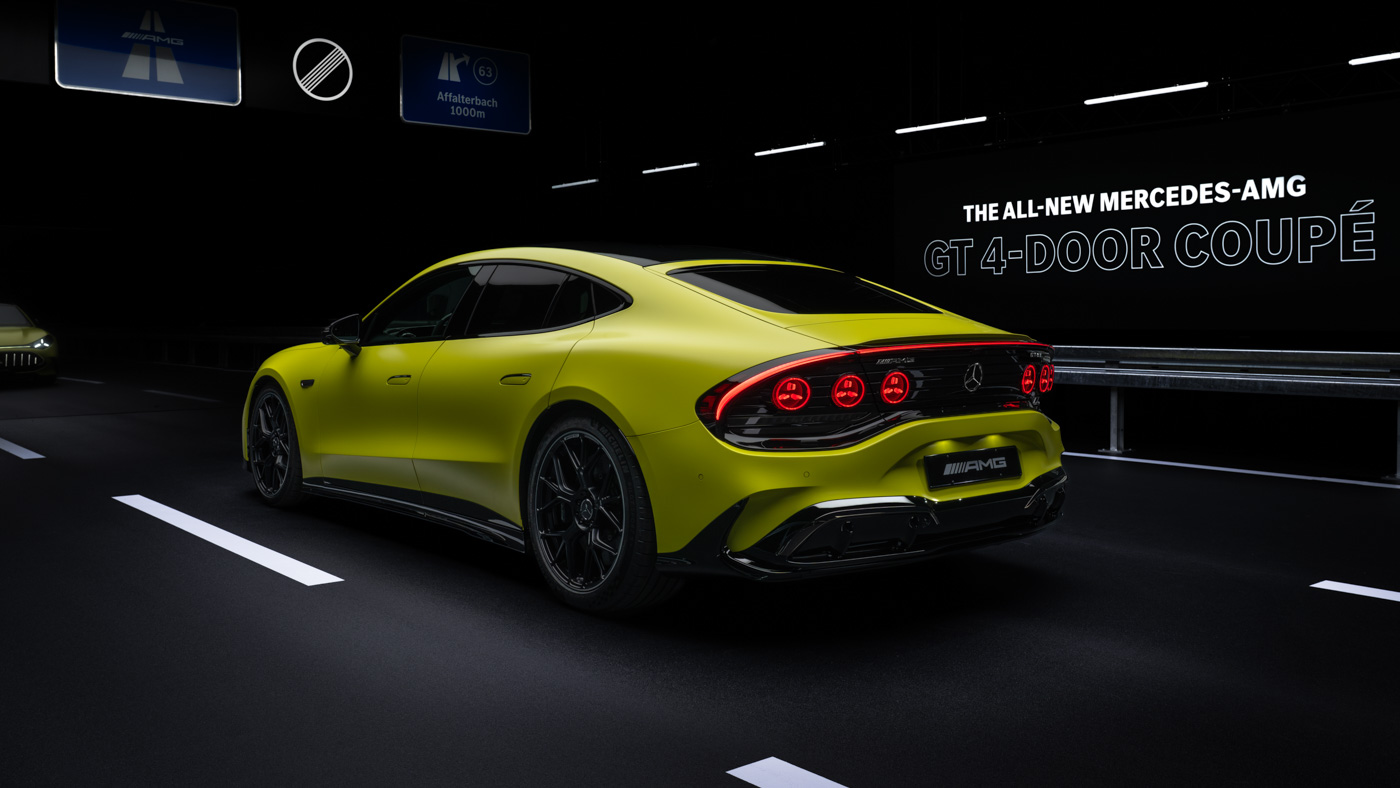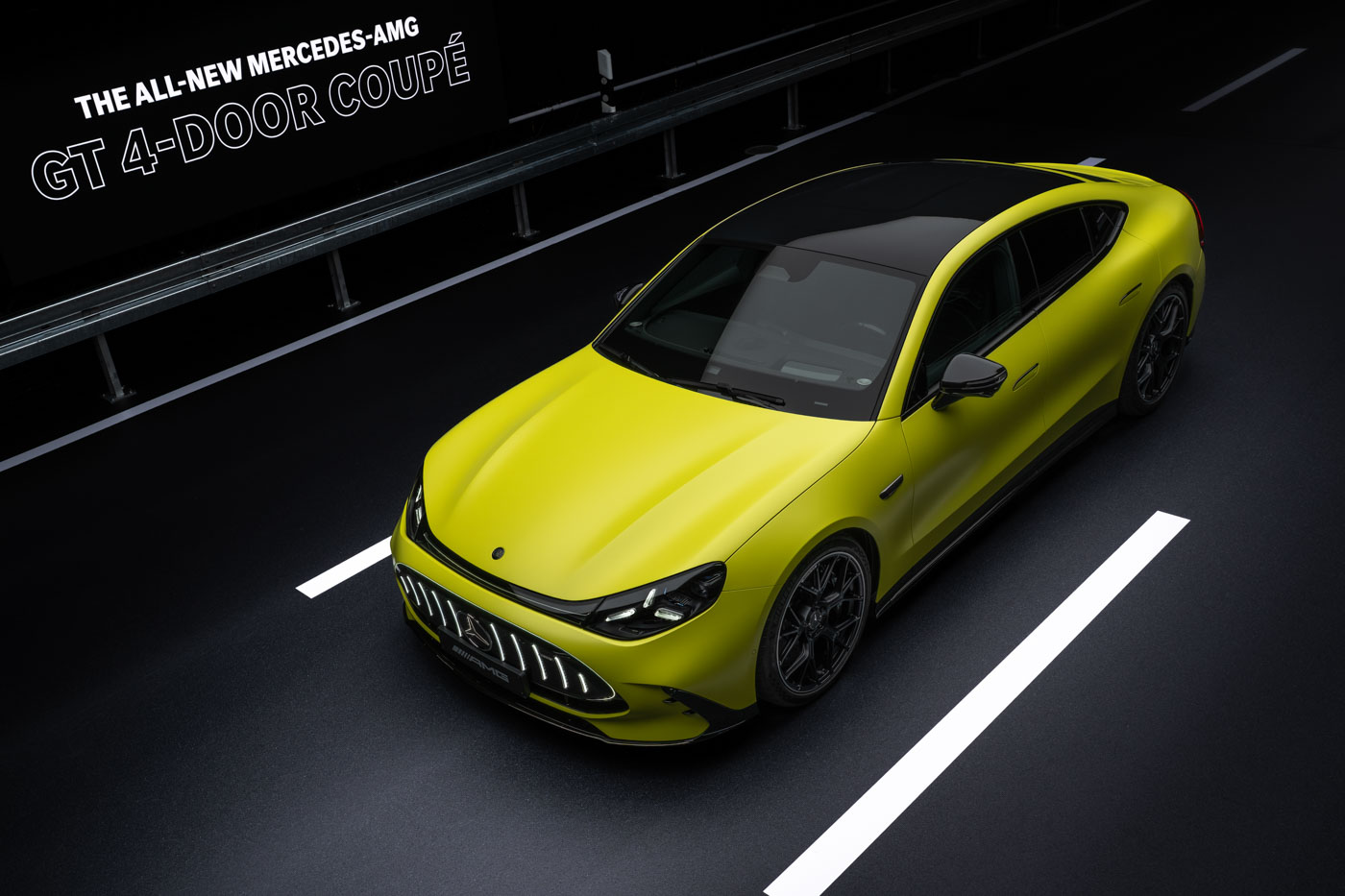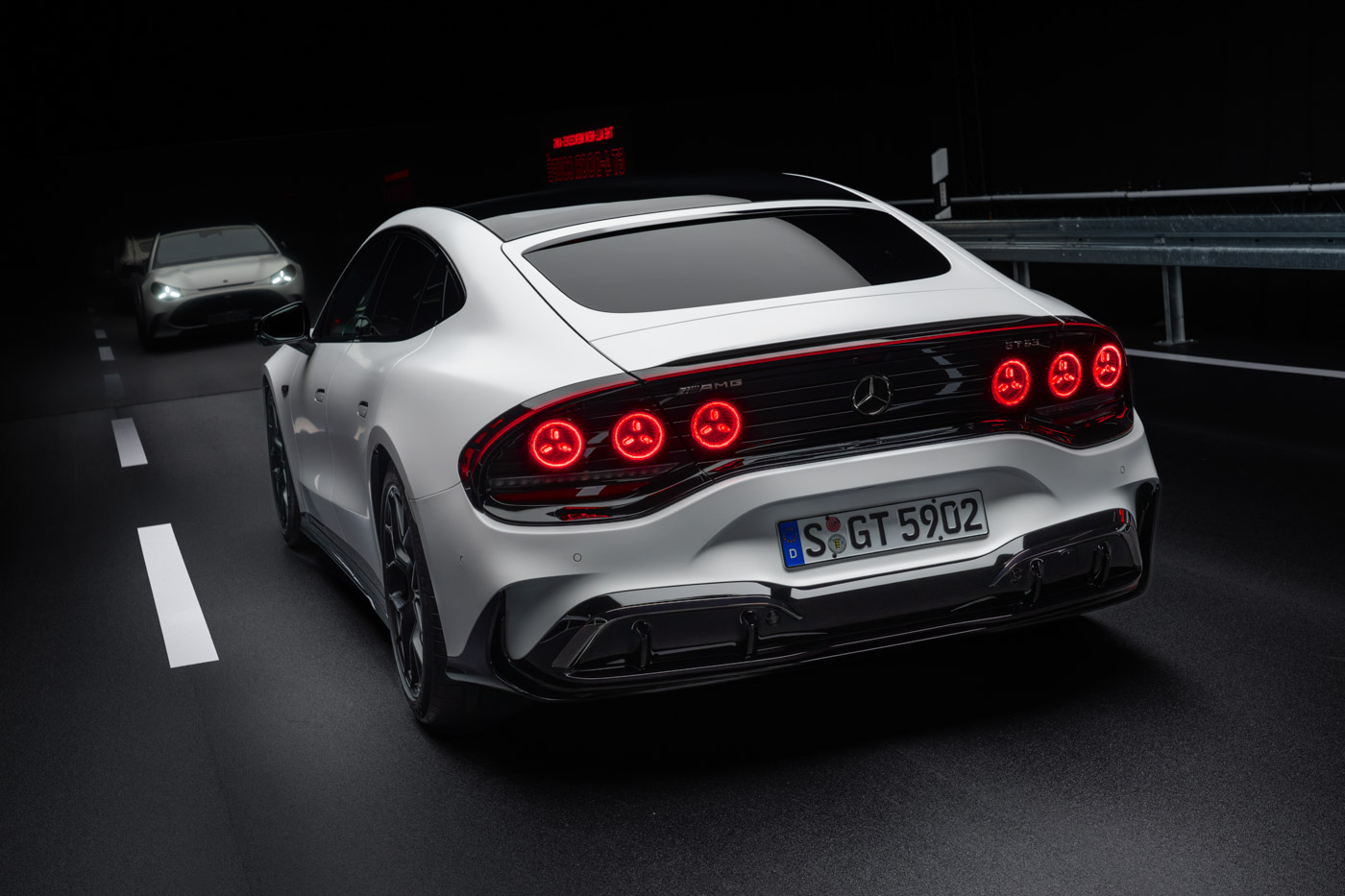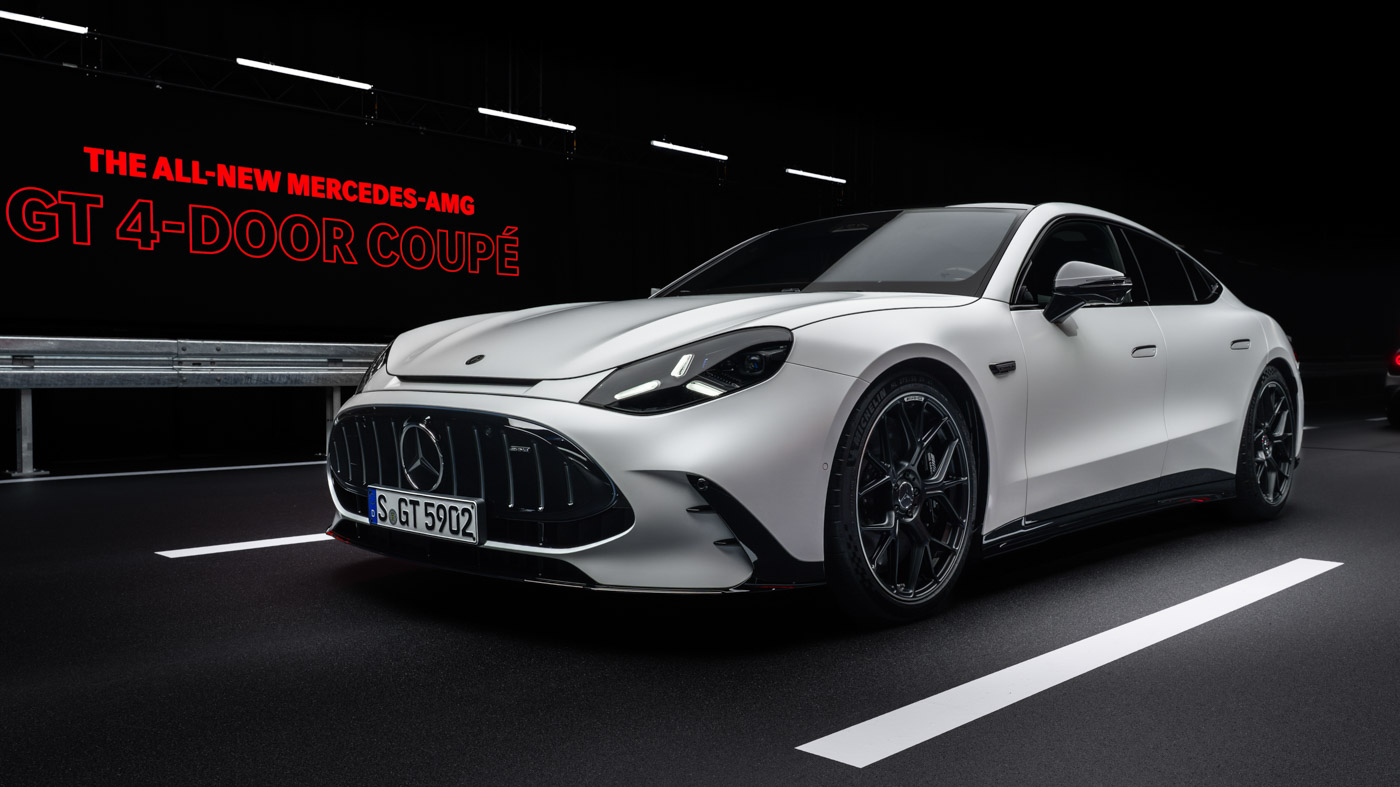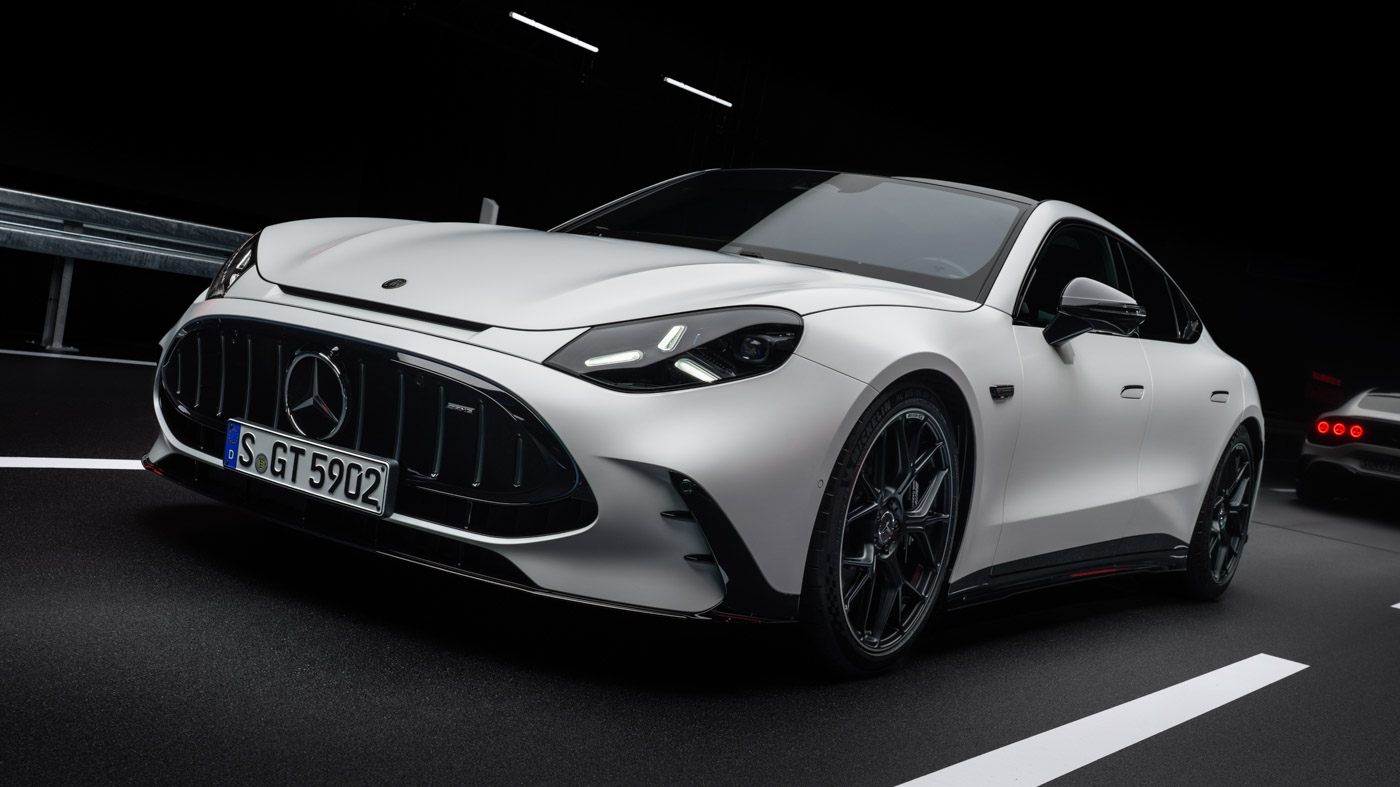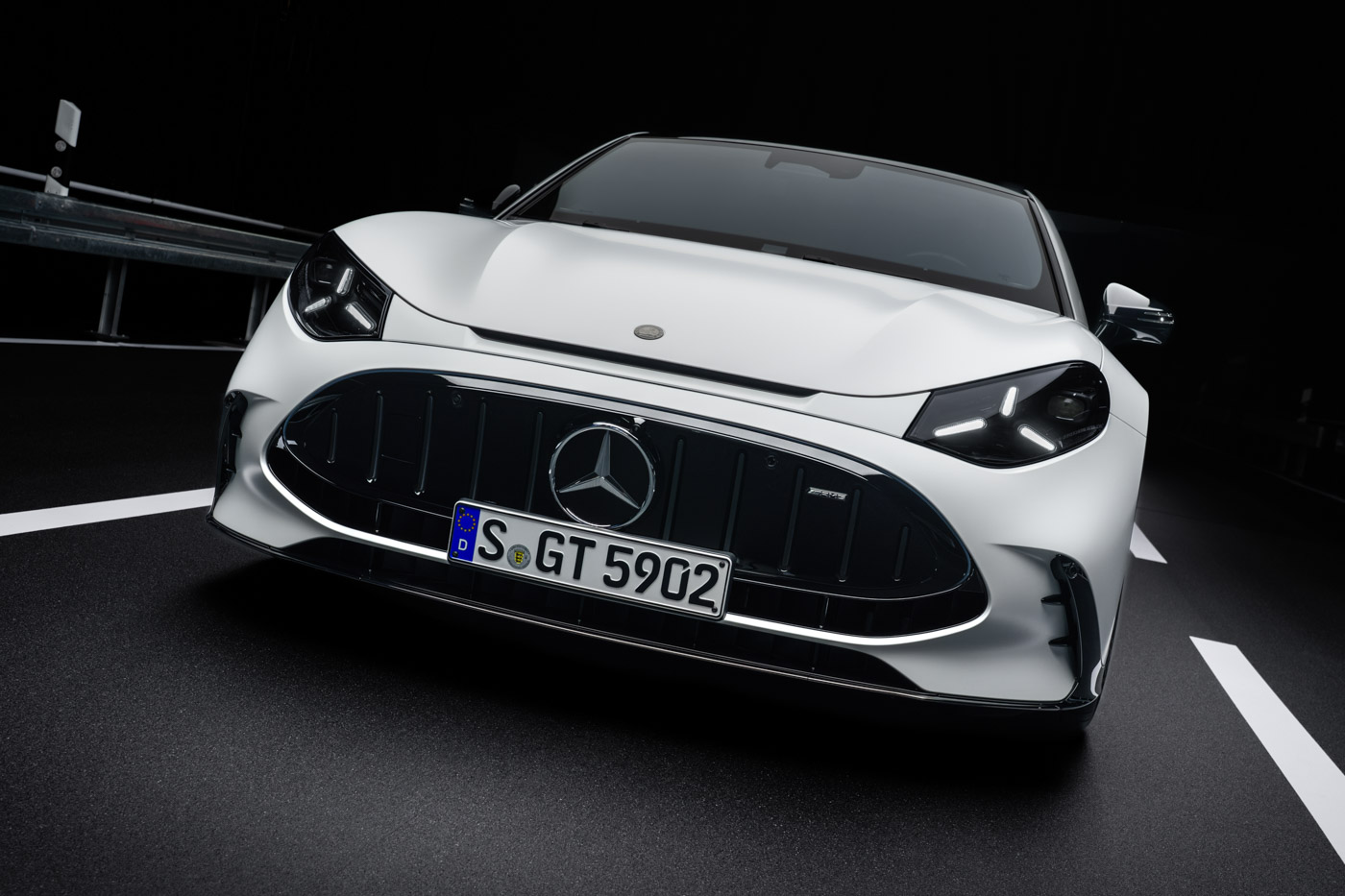
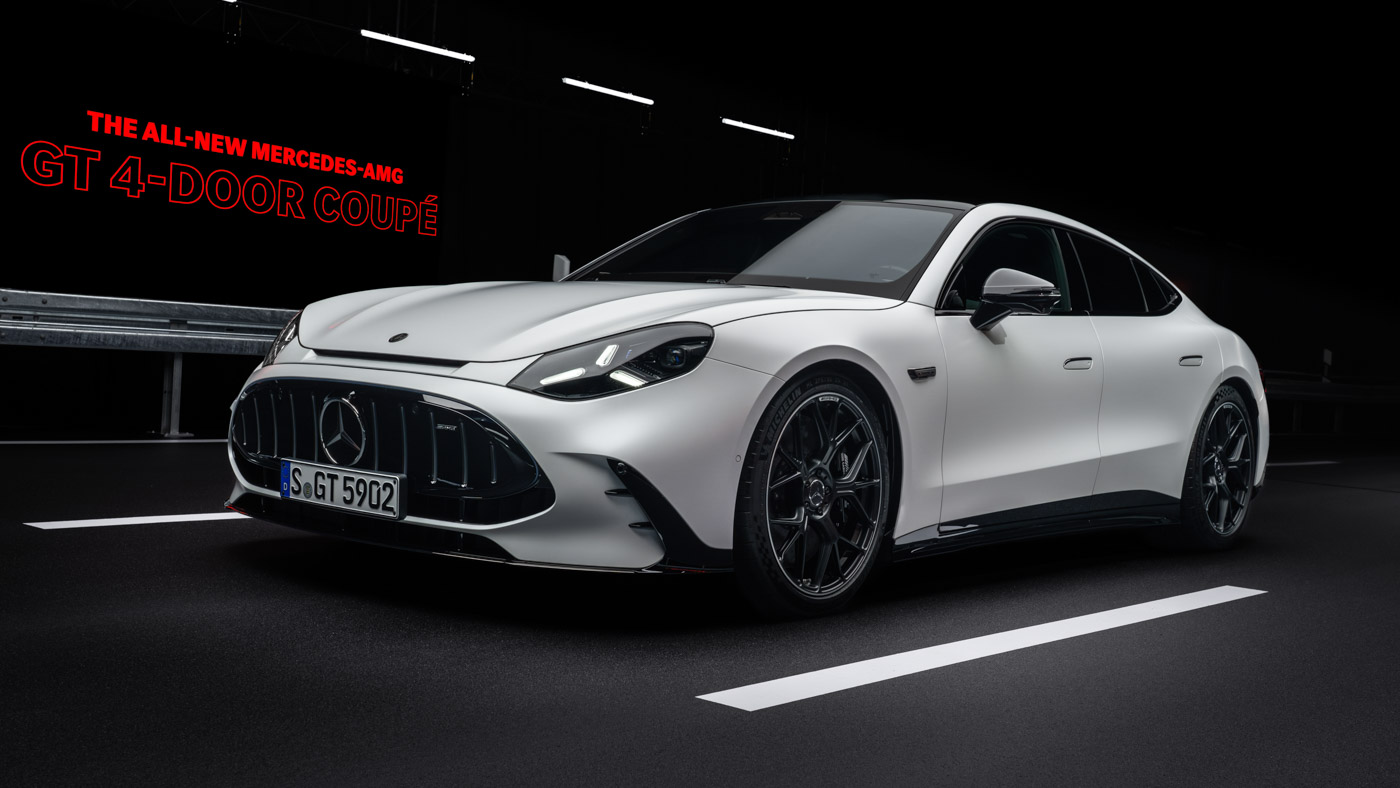
The all-new Mercedes-AMG GT 4-Door Coupé has officially broken cover, bringing with it a host of new technologies and outrageous power figures. There’s just one catch: it’s now fully electric, abandoning the vicious V8 that its predecessor was once known for. As a result, it also adopts the brand’s electro-futuristic design philosophy — a look that may work on some of the brand’s newer passenger models, but could prove controversial here.
But before we get into its “interesting” looks, let’s talk performance. Because at the end of the day, this is still an AMG. The all-new Mercedes-AMG GT 4-Door Coupé is now built on Mercedes-AMG’s new dedicated 800V AMG.EA high-performance EV architecture, it introduces a newly developed drive concept featuring highly innovative axial flux motors developed by British electric motor specialist Yasa — a company owned by Mercedes-Benz.
According to Mercedes-AMG, this is the first time this motor technology is being implemented into a production EV, after first previewing it in the Concept AMG GT XX. So what’s the big deal about these motors?
Unlike conventional electric motors, where the electromagnetic flux runs perpendicular to the motor shaft, an axial flux motor runs parallel to the axis of rotation. Its key components are also designed as thin discs, where two rotors essentially sandwich the stator from both sides. What this allows is a motor that’s significantly smaller and lighter while also being far more power-dense.
ALSO READ: The Concept AMG GT XX is a 1,360 hp preview of Mercedes-AMG’s future
There are three such motors in total, integrated into High-Performance Electric Drive Units (HP.EDU) on both axles. At the rear, two axial flux motors are paired to a single-stage planetary gearbox, while another motor powers the front axle.
Combined output? A frankly absurd 1,169 hp and 1,800 Nm of torque. That’s enough to launch the AMG GT 4-Door Coupé from 0-100 km/h in a face-melting 2.1 seconds, while 0-200 km/h takes only 6.4 seconds.
It’s worth noting that those pant-soiling figures are only achievable when AMG Launch Control is activated. Pull both paddles regardless of whichever drive mode you’re in, Comfort, Sport, or Sport+, and the system unleashes an additional 150 hp, bringing total output to the full 1,169 hp figure for up to 63 seconds.
ALSO READ: Mercedes-Benz teases new “extreme” AMG model – is this the CLE Black Series?
To keep all this performance cool and repeatable, the motors and gearboxes are oil-cooled, while the required Pump Control Unit, hydraulic pumps and suction filters are all integrated into the HP.EDU itself to save space. Mercedes-AMG also uses water-cooled silicon-carbide (SiC) inverters, with one inverter per motor. The material properties of silicon carbide allow the system to handle extremely high voltages, temperatures and currents while maintaining excellent thermal efficiency. The rear axial flux motors can spin at over 13,000 rpm, while the front motor exceeds 15,000 rpm.
Interestingly, the front motor acts more like a “booster motor”, only engaging when additional traction or power is needed. Under lighter loads, a Disconnect Unit (DCU) decouples the front axle motor within milliseconds to reduce drag losses and improve efficiency. During acceleration or regenerative braking, it reconnects instantly for maximum performance.
To help put all that power down, the AMG GT now features active aerodynamic elements, including two active Aerokinetics venturi flow plates in the underbody alongside an active rear diffuser. The car also rides on AMG Active Ride Control air suspension with triple-adjustable air springs and semi-active roll stabilisation.
The shock absorbers feature interconnected hydraulic elements that replace conventional anti-roll bars, allowing the system to actively vary roll stiffness. During straight-line cruising, the system can fully open up for comfort, while cornering sees the hydraulics stiffen things up to reduce body roll and improve precision.
ALSO READ: The 4-cylinder Mercedes-AMG C63 is reportedly dead after 2026, for a reason you’ll never guess
Mercedes-AMG says the lightweight suspension construction also uses die-cast and forged aluminium components to reduce unsprung mass and improve recyclability.
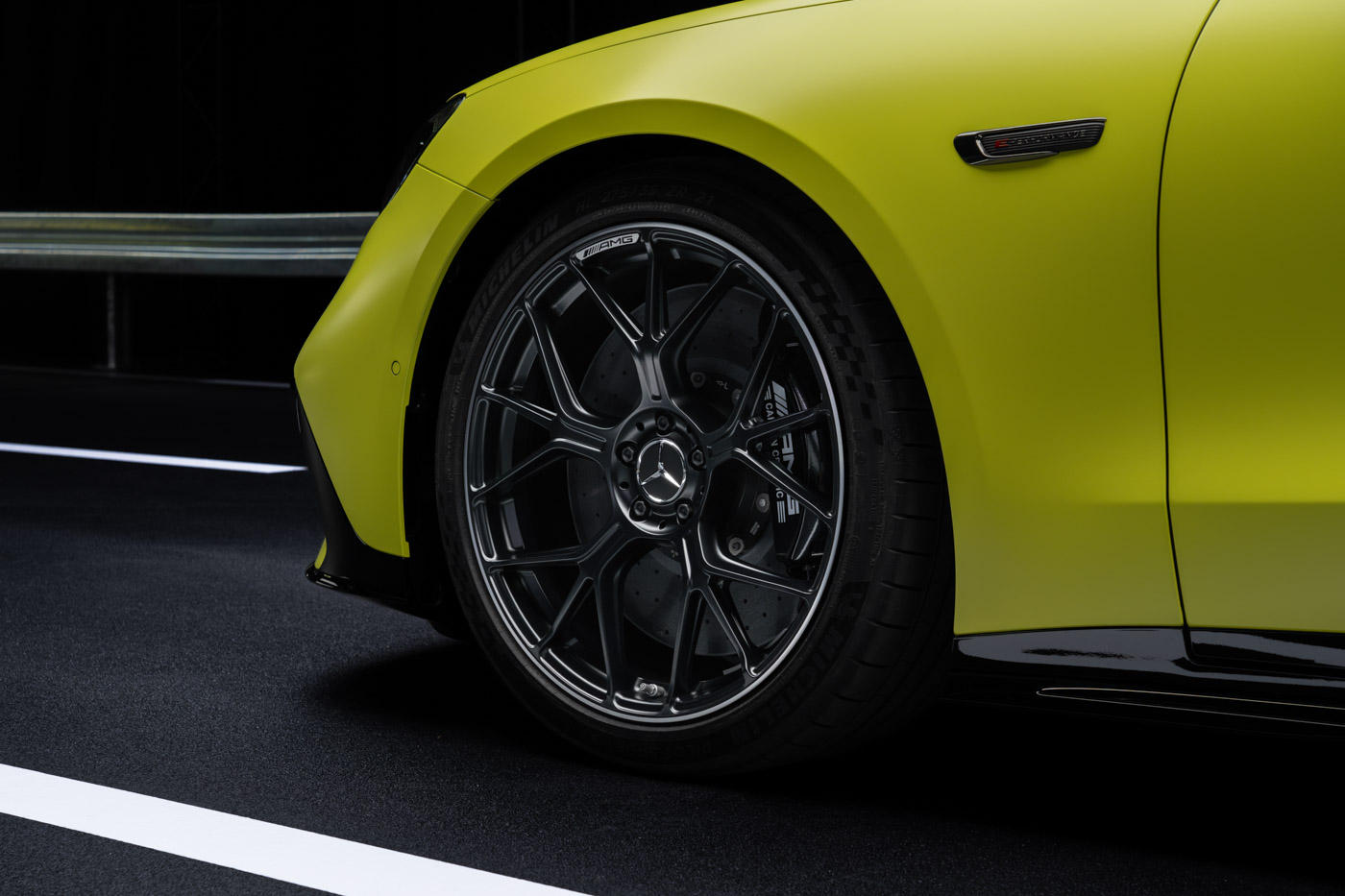
Power is sent through the fully variable AMG Performance 4Matic+ all-wheel-drive system, while rear-axle torque vectoring allows power to be distributed individually between the rear wheels for improved handling and traction. Ceramic brakes are also available, while regenerative braking has been tuned to maintain a more natural pedal feel.
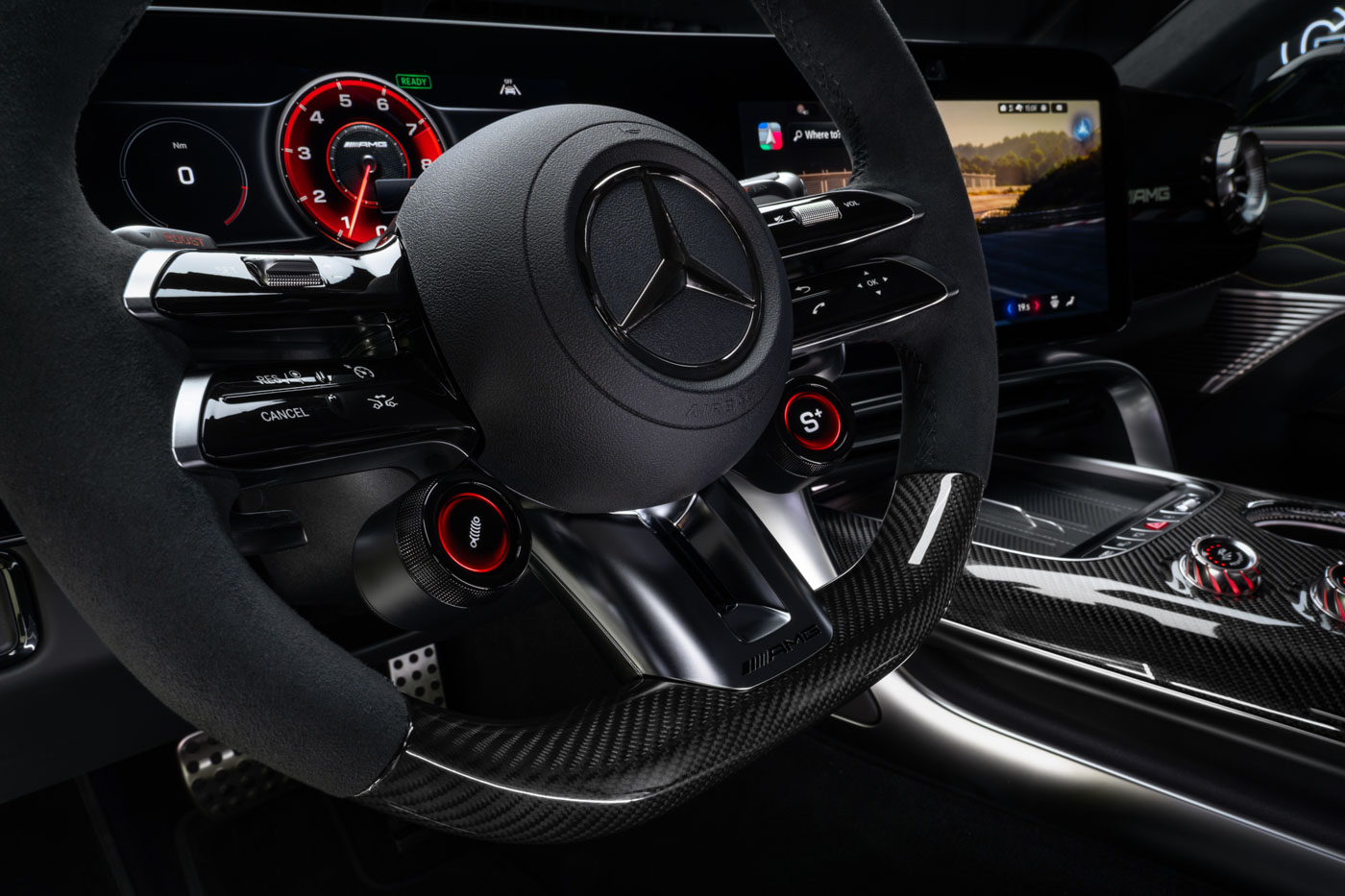
Despite ditching the V8, AMG clearly knows its audience… or does it? Engage AMG Force S+ mode, and the car pumps simulated V8 sounds through its speakers. It even mimics the shifting sensation of a traditional gearbox by briefly interrupting power delivery during “gear changes”.
Similar to the S+ Shift mode in the Honda Prelude, it also simulates the shifting response of a traditional engine and gearbox powertrain by introducing brief interruptions upon “shifting gears” for what Mercedes-AMG calls “a haptic-immersive experience”
Powering everything is a “completely new” 106 kWh battery pack capable of delivering over 700 km of WLTP range. Thanks to its 800V architecture, the AMG GT supports up to 600 kW DC fast charging, allowing it to recover over 460 km of range in just 10 minutes, while a 10-80% charge takes only 11 minutes.
The battery itself uses newly developed cylindrical cells measuring 105 mm tall and 26 mm wide. According to Mercedes-AMG, the slim design improves heat dissipation and helps maintain optimal operating temperatures for consistent performance.
The cells also use full-tab technology to reduce internal resistance, while a new NCMA (Nickel/Cobalt/Manganese/Aluminium) chemistry paired with a silicon-containing anode improves charging and discharge performance. In total, the battery pack contains 2,660 cells grouped into 18 plastic modules.
The battery is also structurally integrated into the car’s all-new body structure, which combines aluminium, steel and fibre-reinforced composites to maximise rigidity while keeping weight low. Mercedes-AMG says the battery housing itself helps absorb and distribute crash forces as part of the vehicle’s overall safety structure.
ALSO READ: The new Mercedes-AMG GLC53 offers sideways fun for the whole family with new Drift Mode
With such immense power being deployed constantly, cooling is handled by a new direct cooling system capable of delivering at least 20 kW of cooling capacity — significantly more than the five to eight kW typically seen in conventional EV battery systems. The Battery Management System (BMS) is also actively cooled, while new virtual sensors estimate internal battery temperatures using mathematical models rather than relying solely on physical sensors.
Mercedes-AMG is also particularly proud of its new Central Coolant Hub (CCH), first previewed in the Concept AMG GT XX. The compact unit combines pumps, sensors and valves into a single housing to maximise cooling efficiency during high-load driving and hot ambient conditions.
The new AMG GT 4-Door Coupé also introduces AMG Race Engineer, a new hardware and software system that centrally manages the car’s powertrain, charging and driving dynamics systems. At its core sits a high-performance processor developed entirely in-house by Mercedes-AMG.
RELATED: The next-gen Mercedes-AMG GT 4-Door Coupé will come with a “race engineer” inside
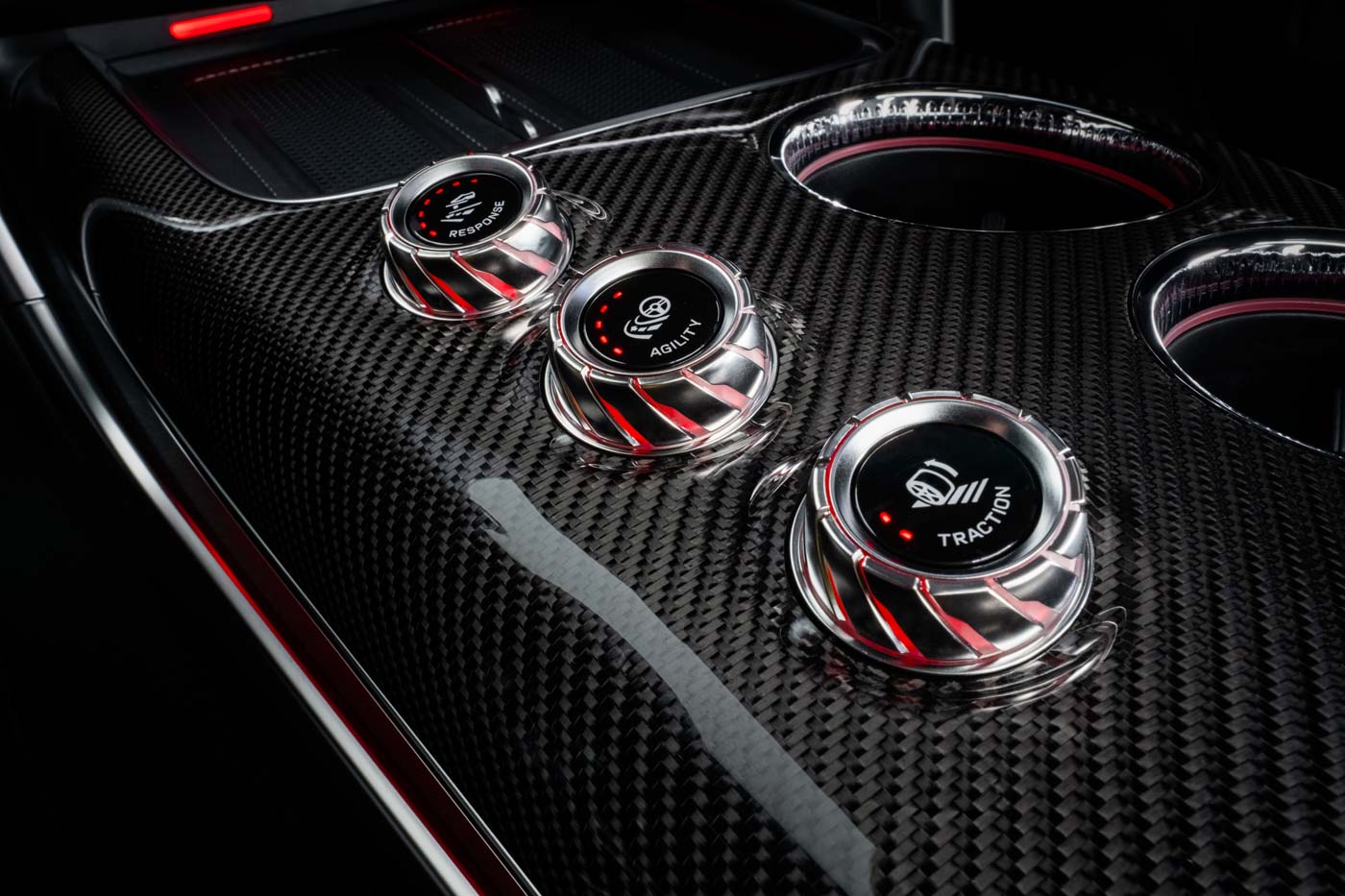
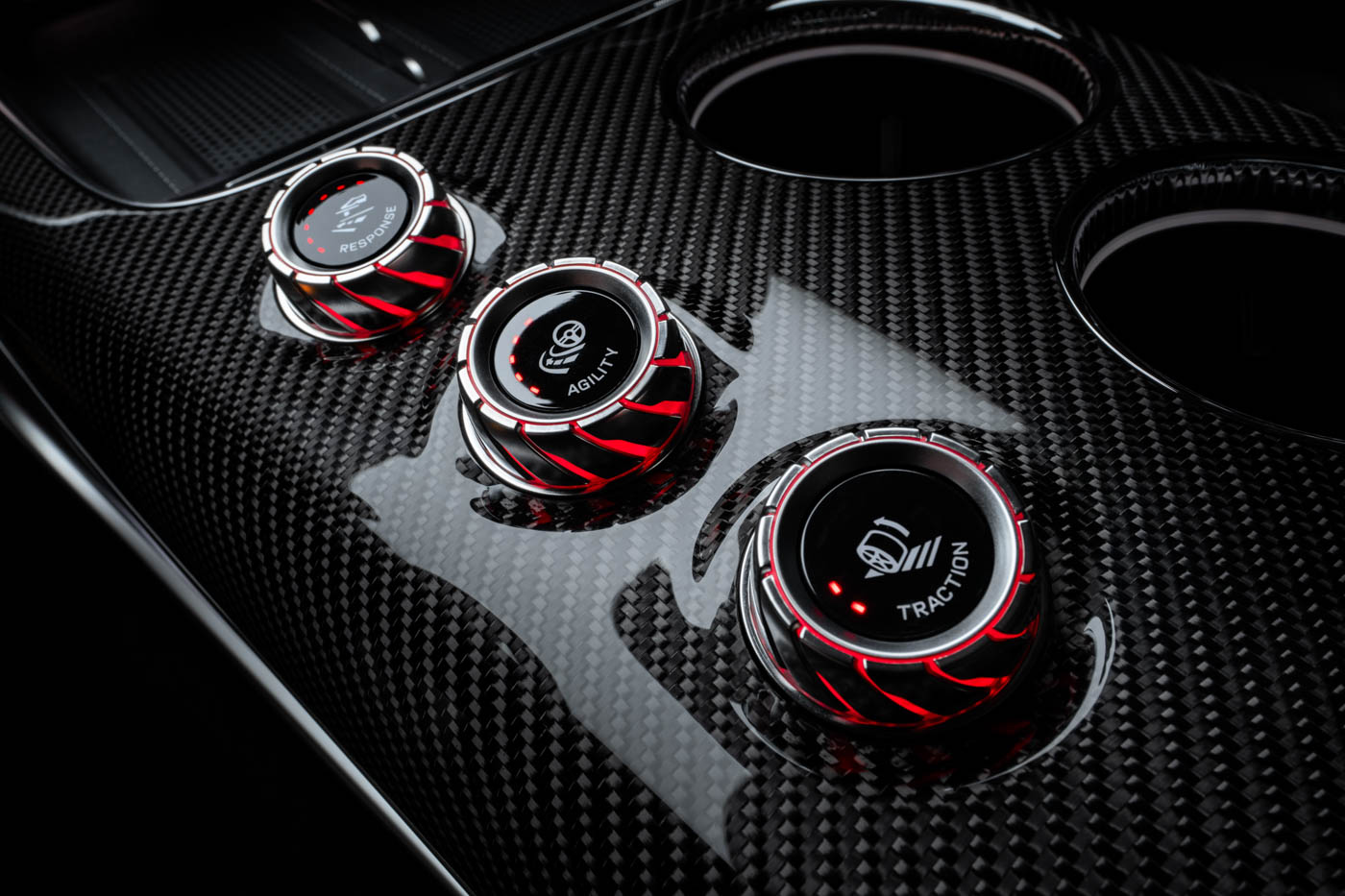
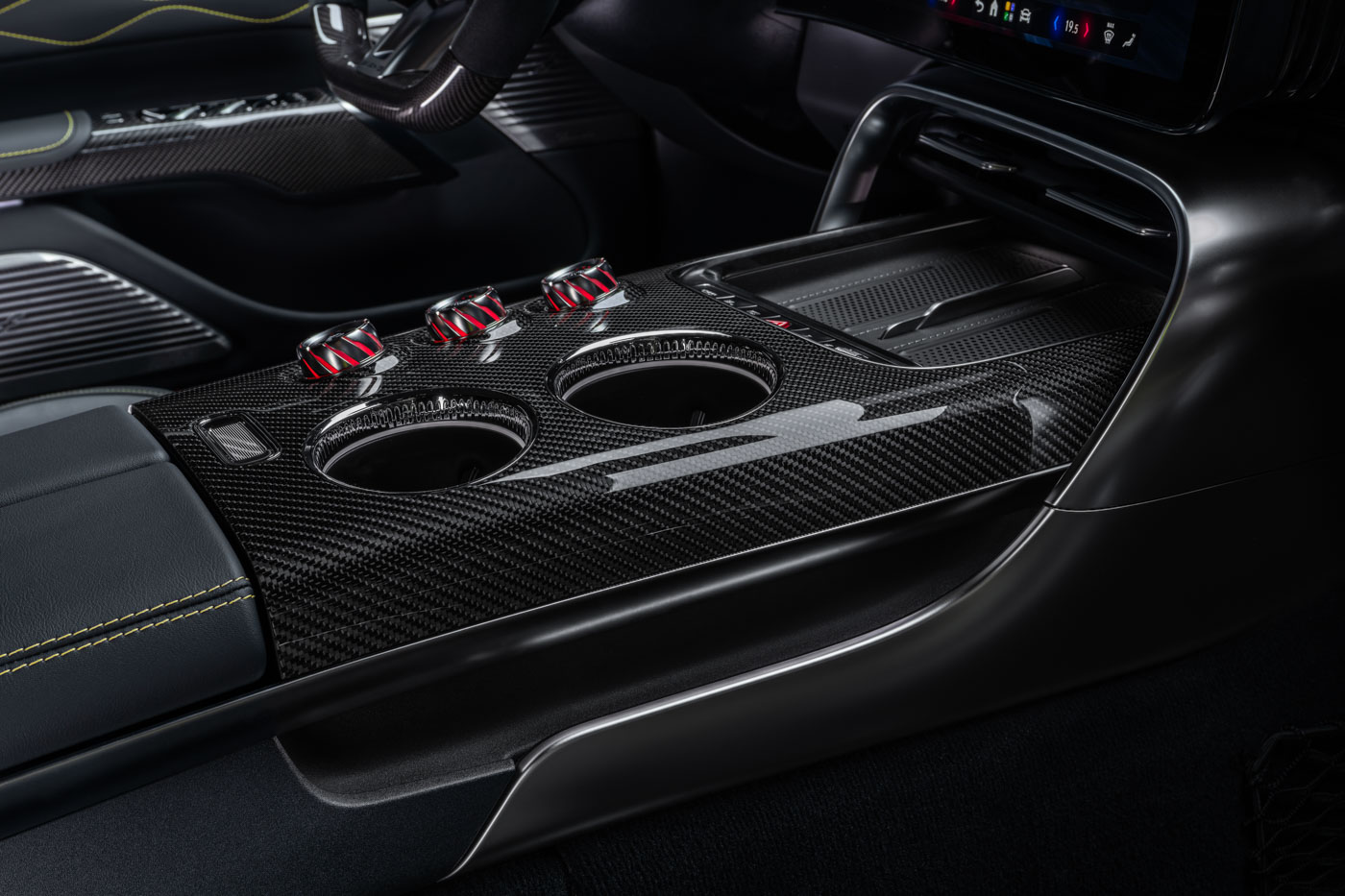
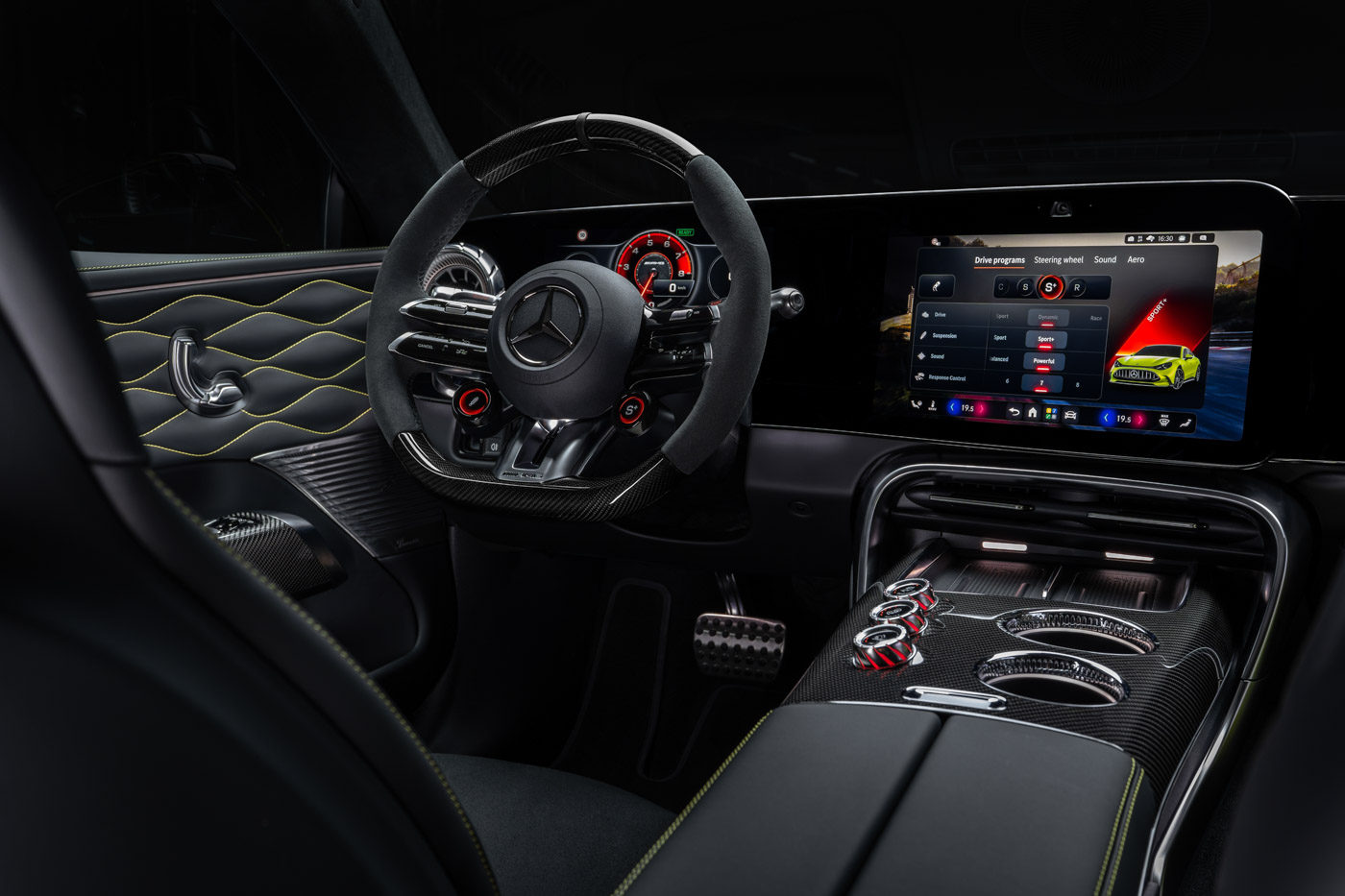
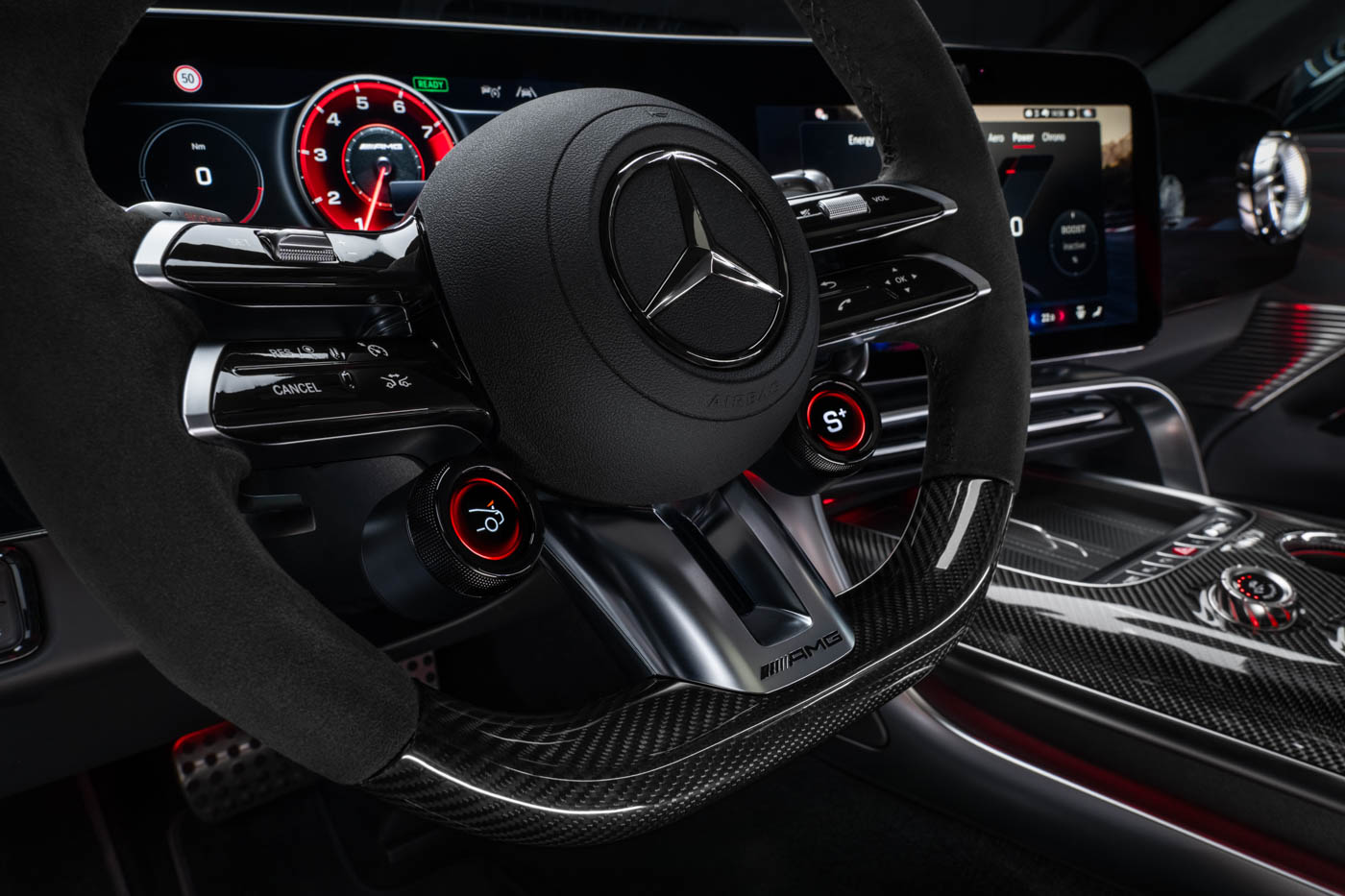
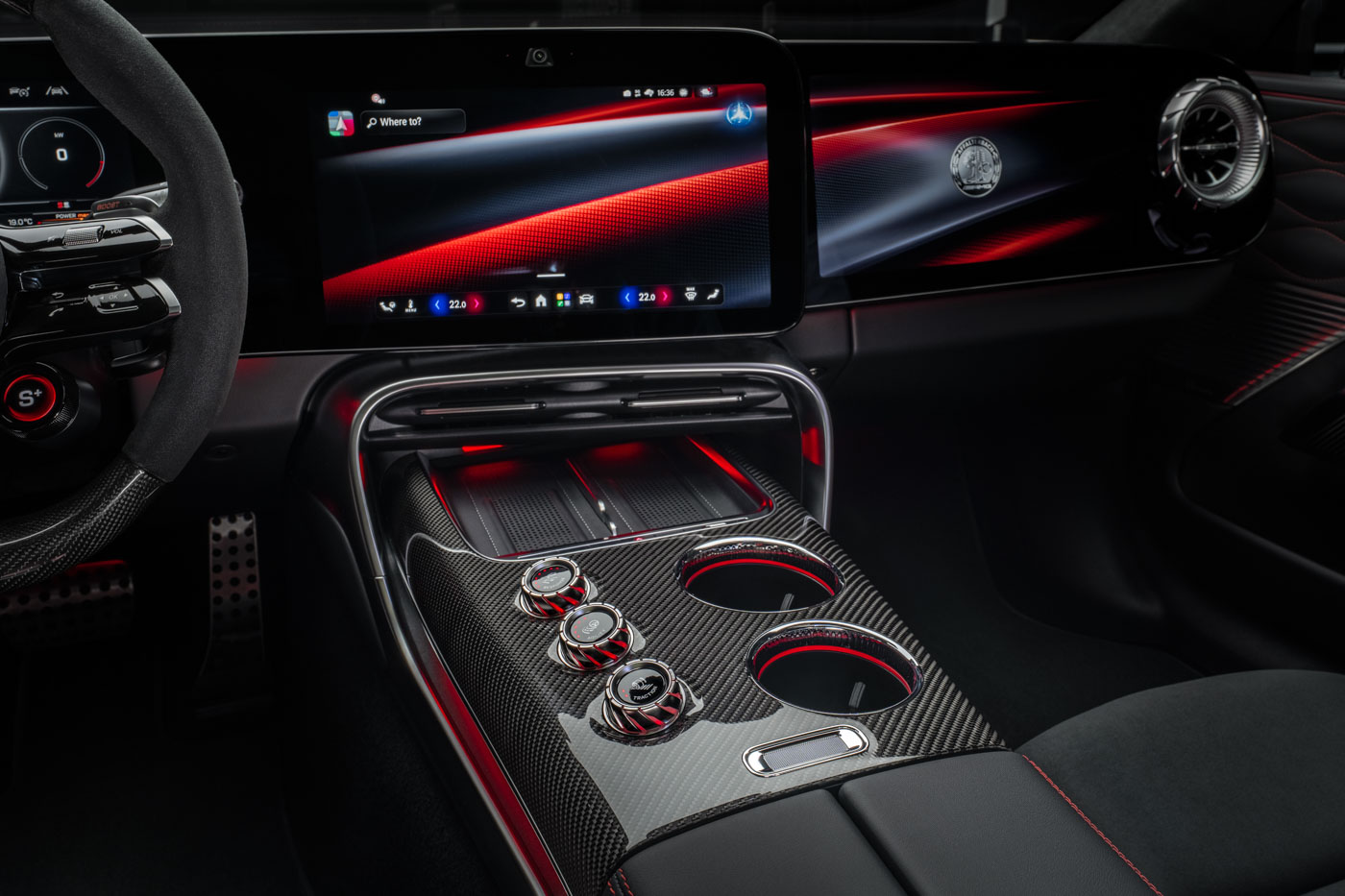
Drivers can also adjust various driving characteristics through three new rotary controllers on the centre console, including accelerator response, handling balance and traction control intervention. The traction control system even offers nine selectable levels, similar to the setup found in the AMG GT R and AMG GT Black Series.
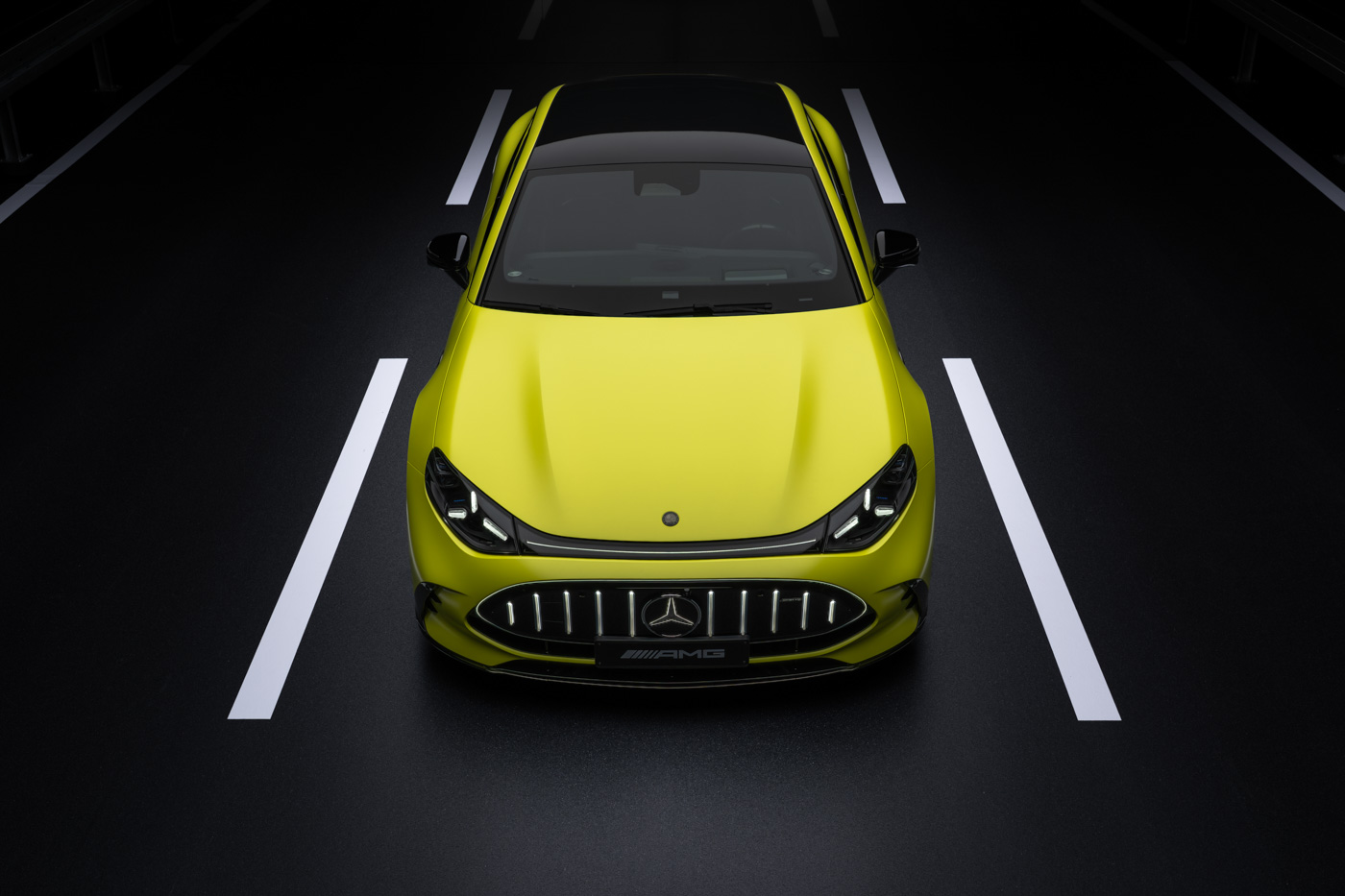
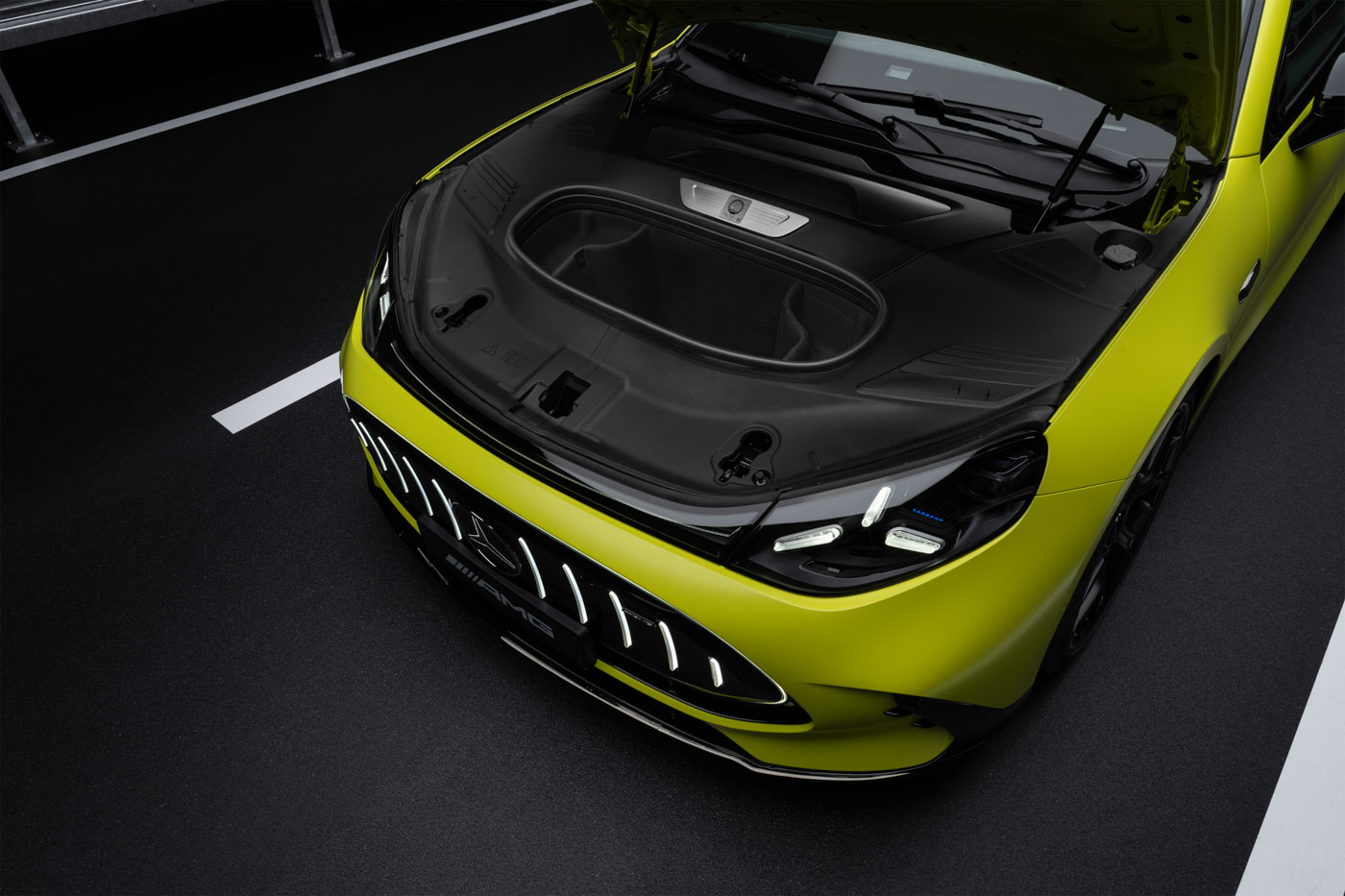
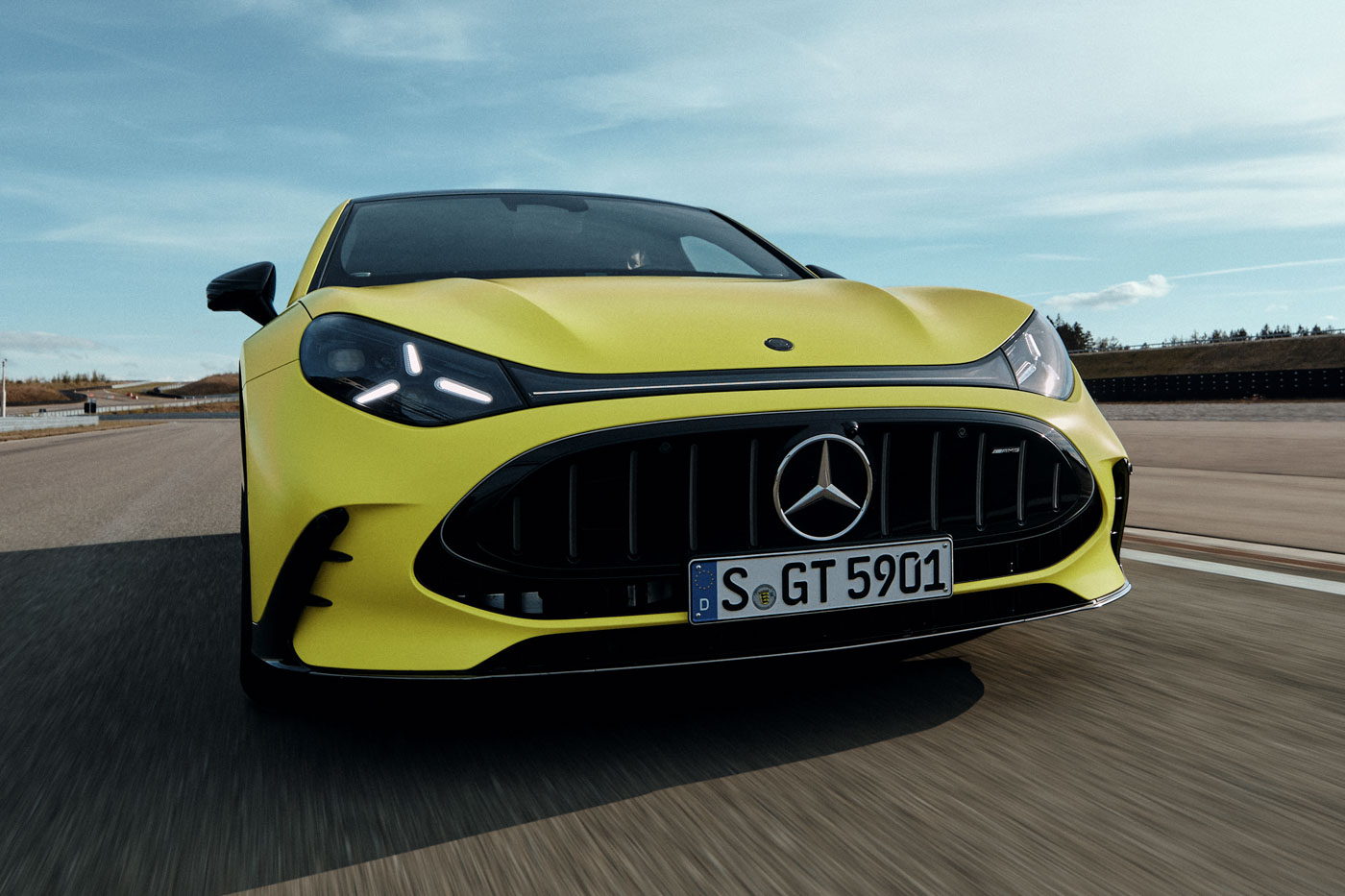
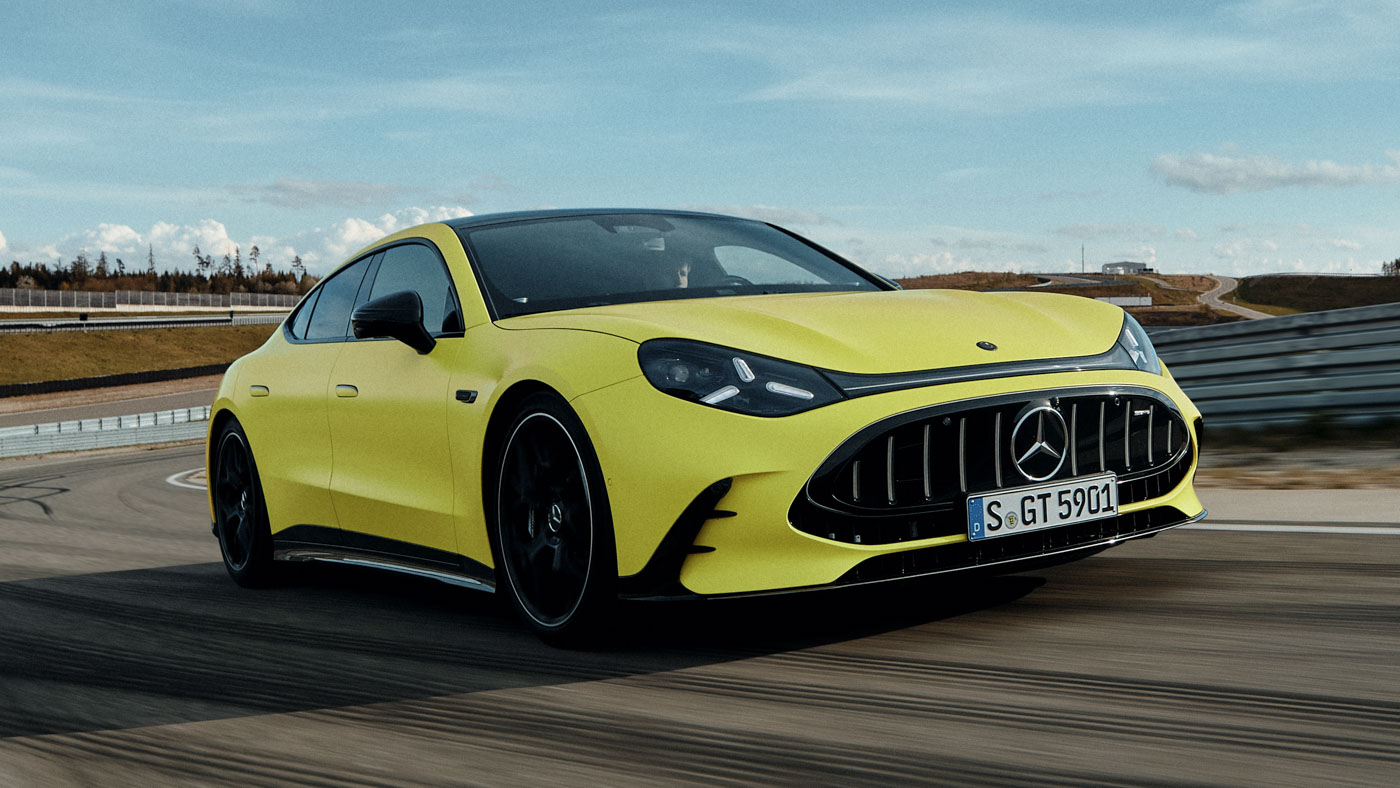
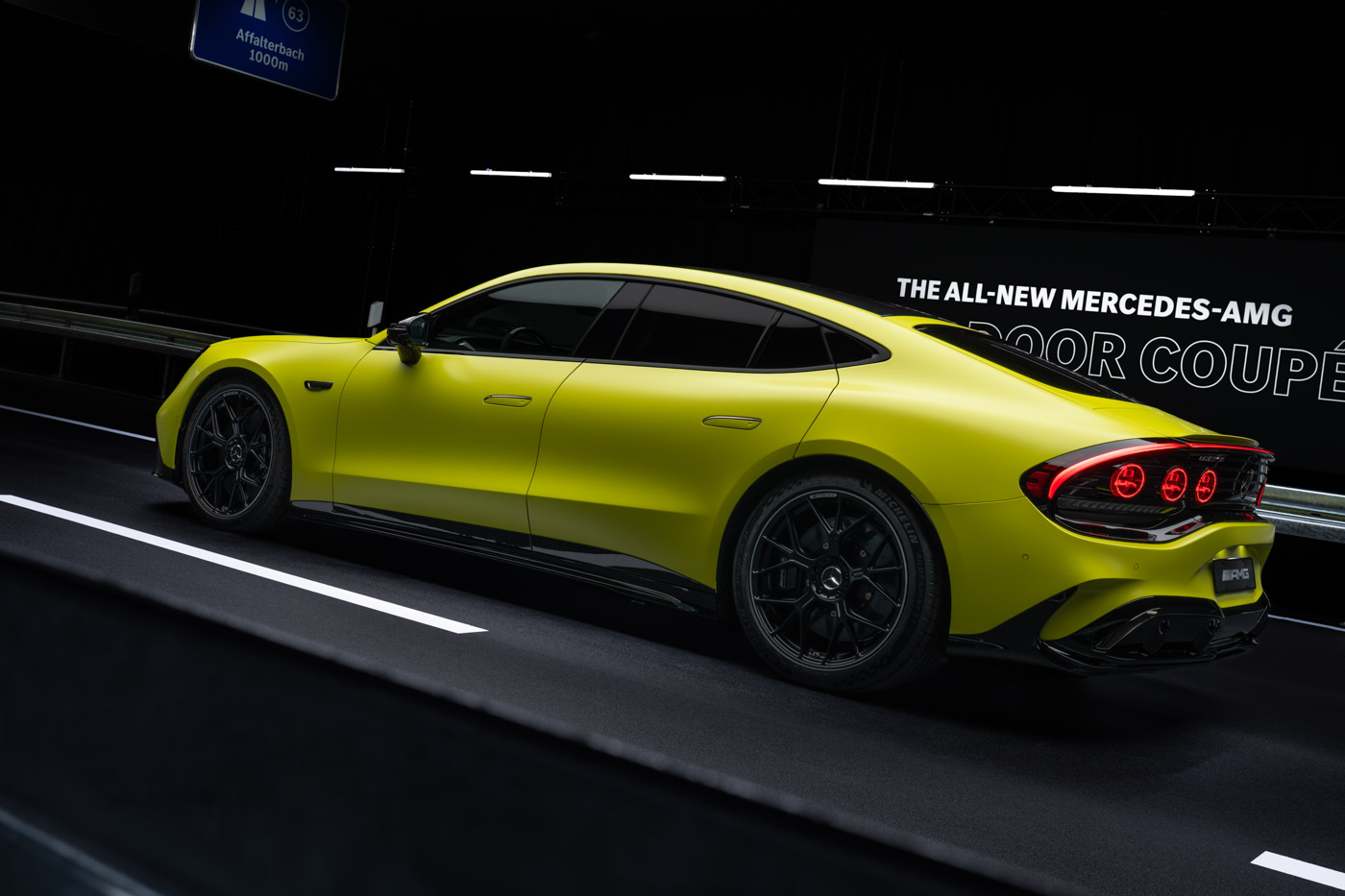
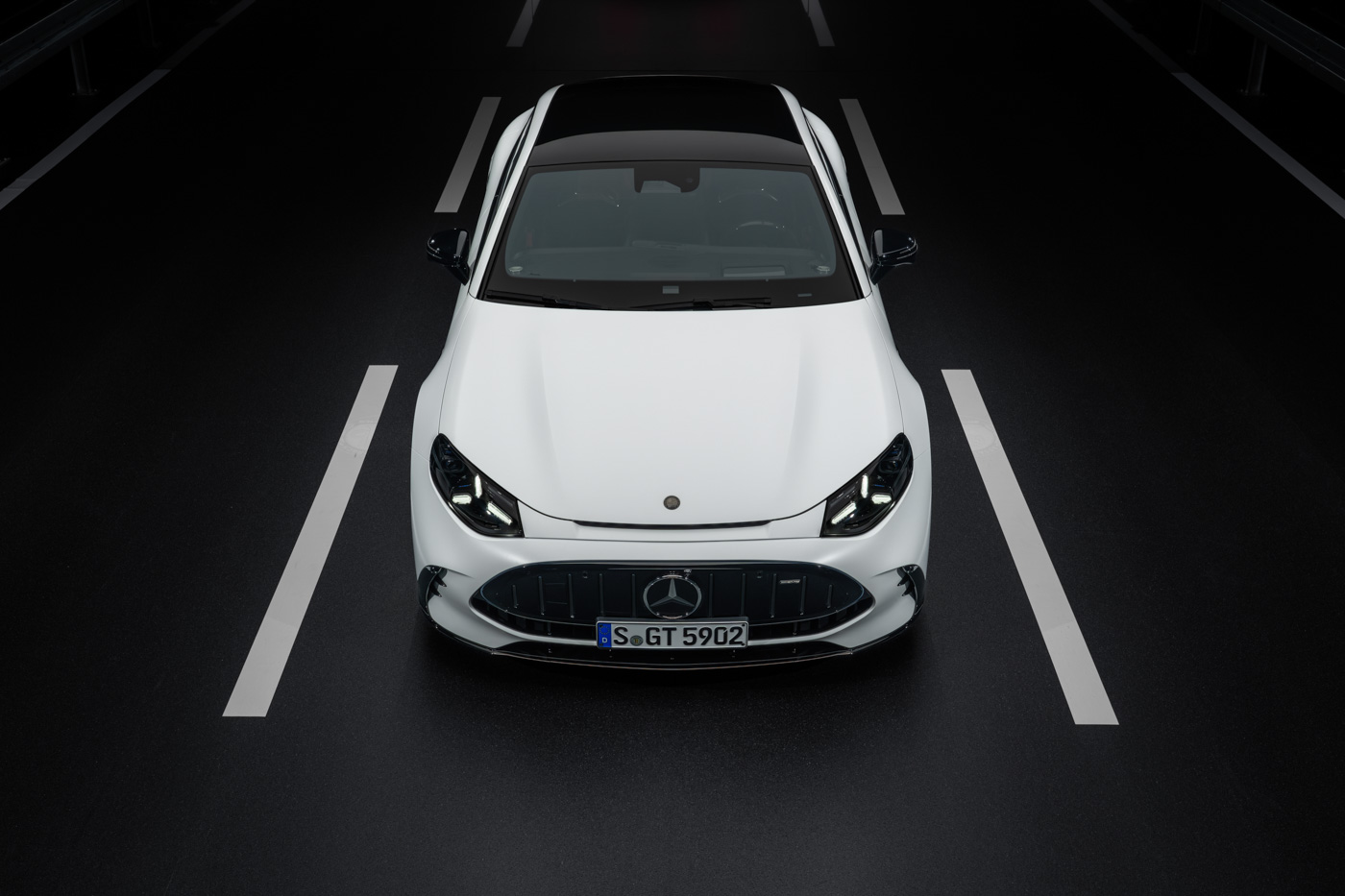
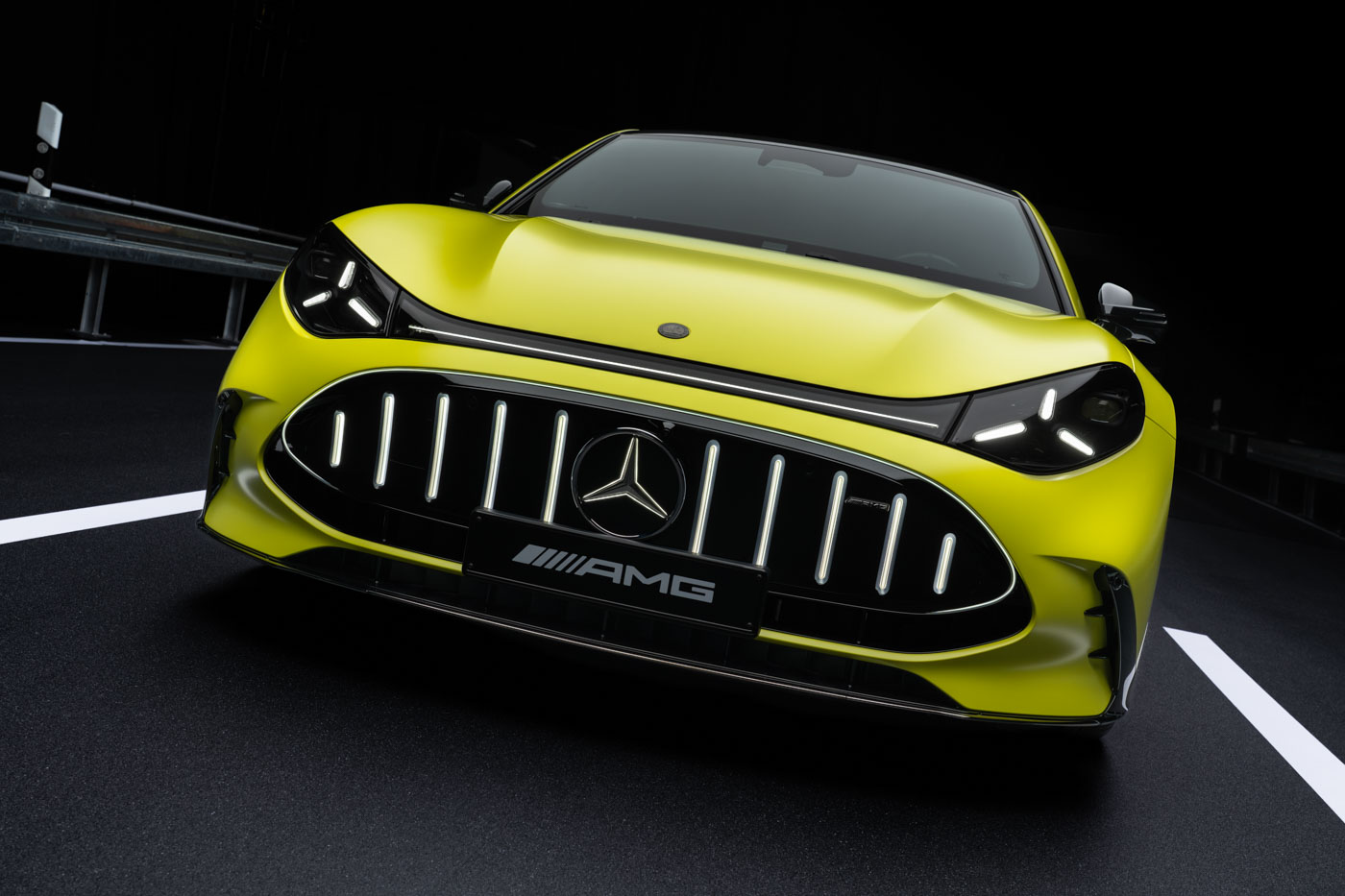
Visually… there’s a lot to unpack. The front still proudly displays AMG’s signature Panamericana grille, though since this is now an EV, the grille isn’t actually a grille anymore. Instead, vertical LED strips mimic the appearance of past models. It’s then paired with LED headlights connected by a full-width light bar because apparently every car designer collectively agreed this is mandatory now.
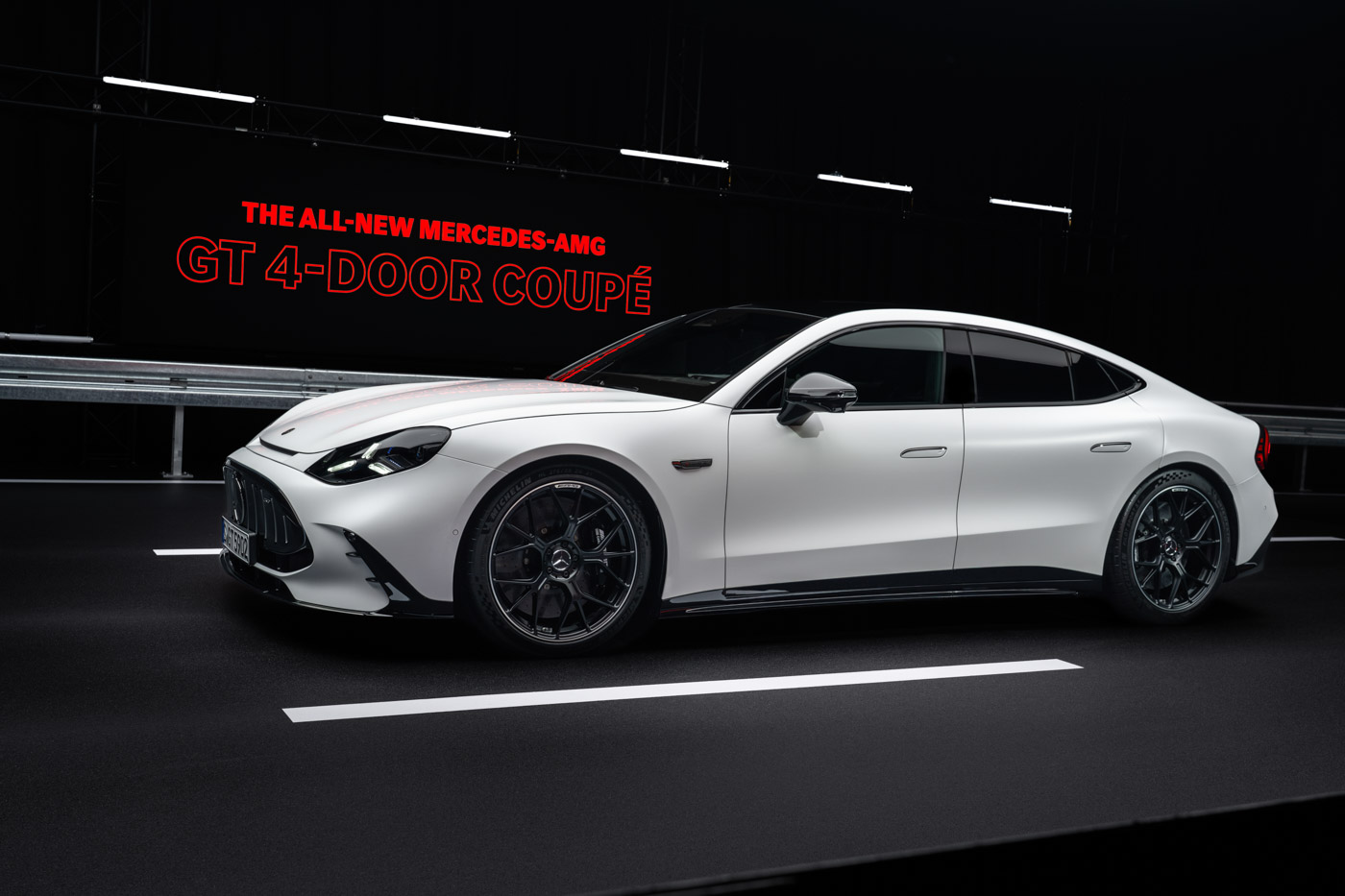
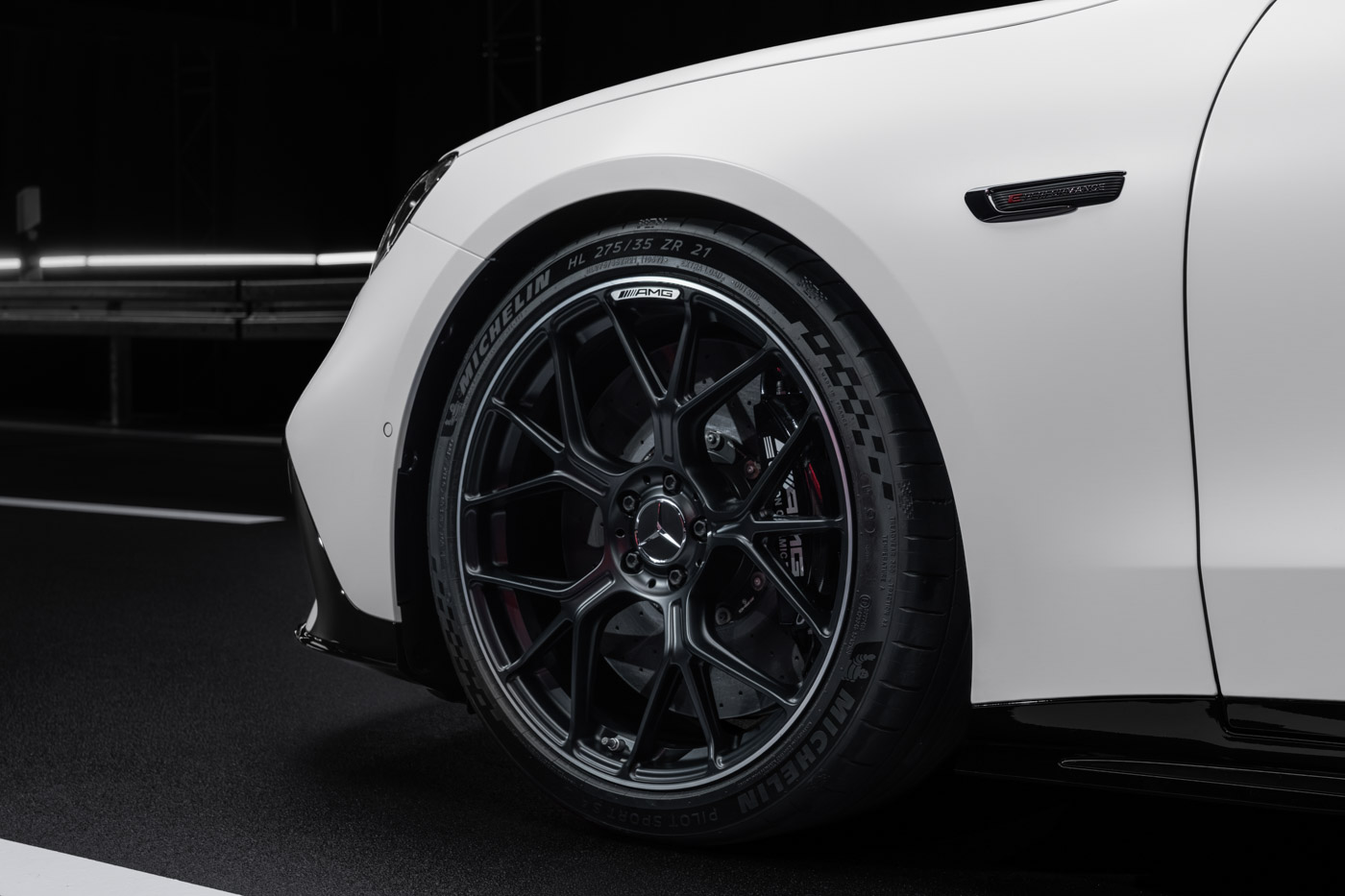
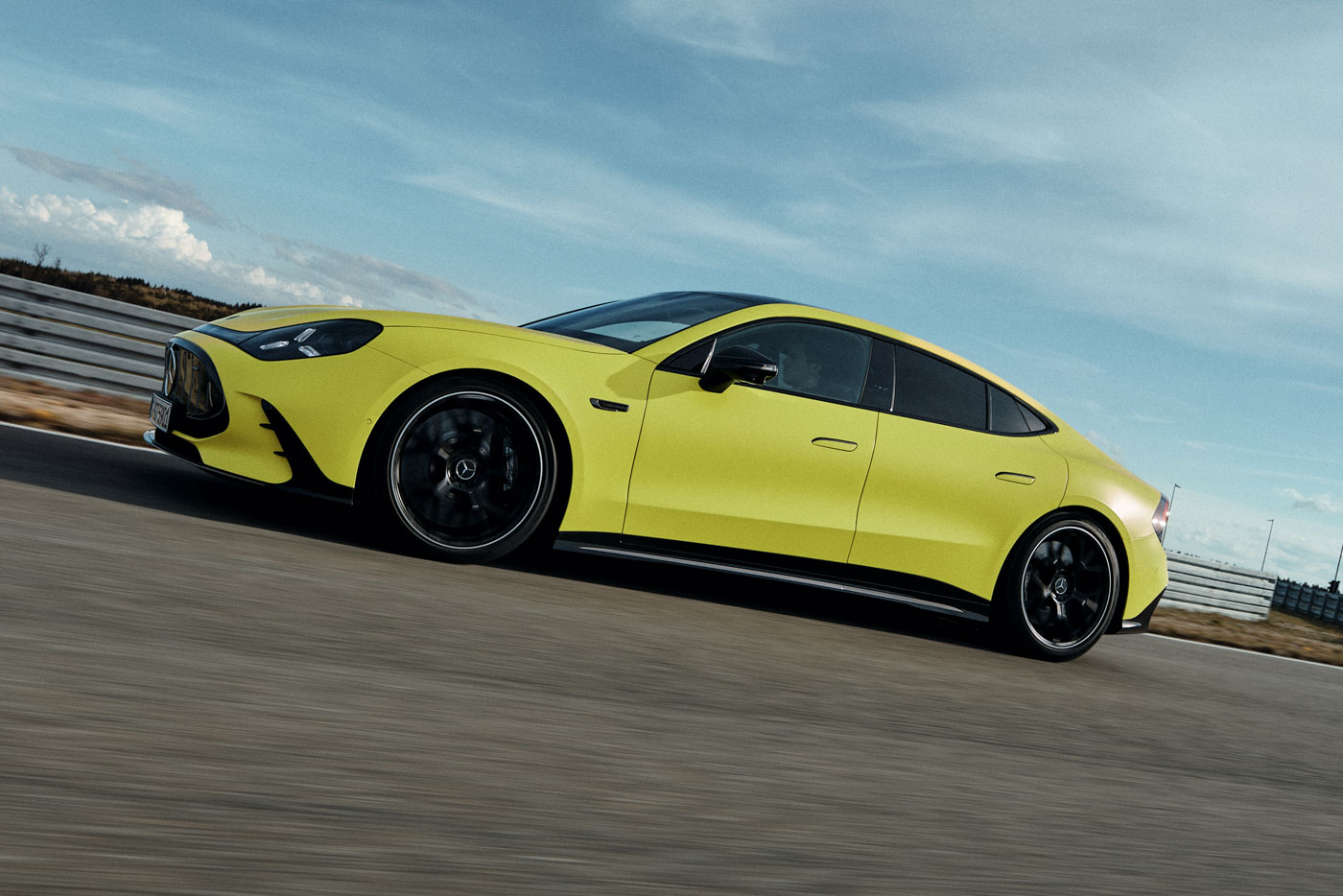
Down the sides, the AMG GT 4-Door continues with its signature long-nose proportions — despite no longer needing space for a massive V8. Instead, that space now houses what is essentially a very expensive front storage compartment Flush pop-out door handles help smooth the profile, while the signature AMG wheel designs make a return.
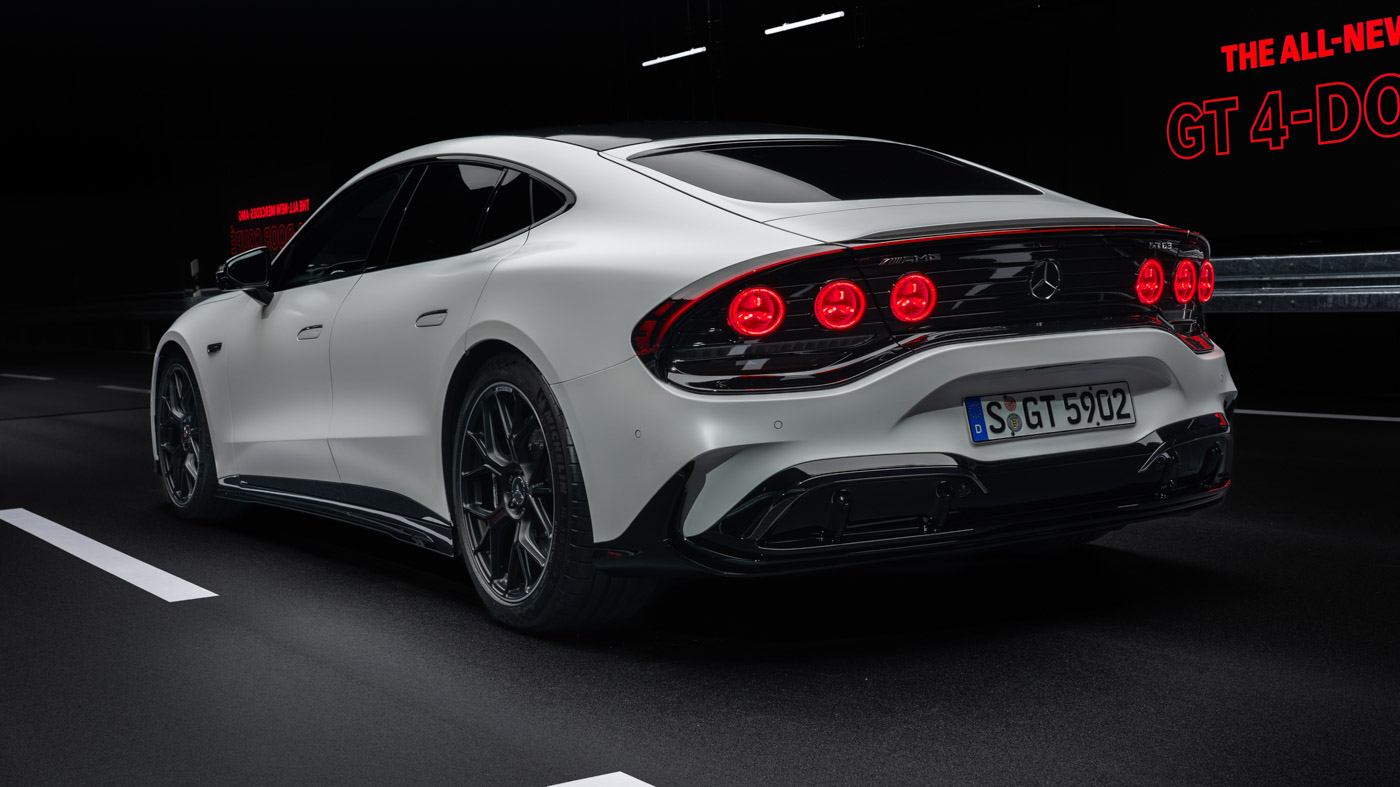
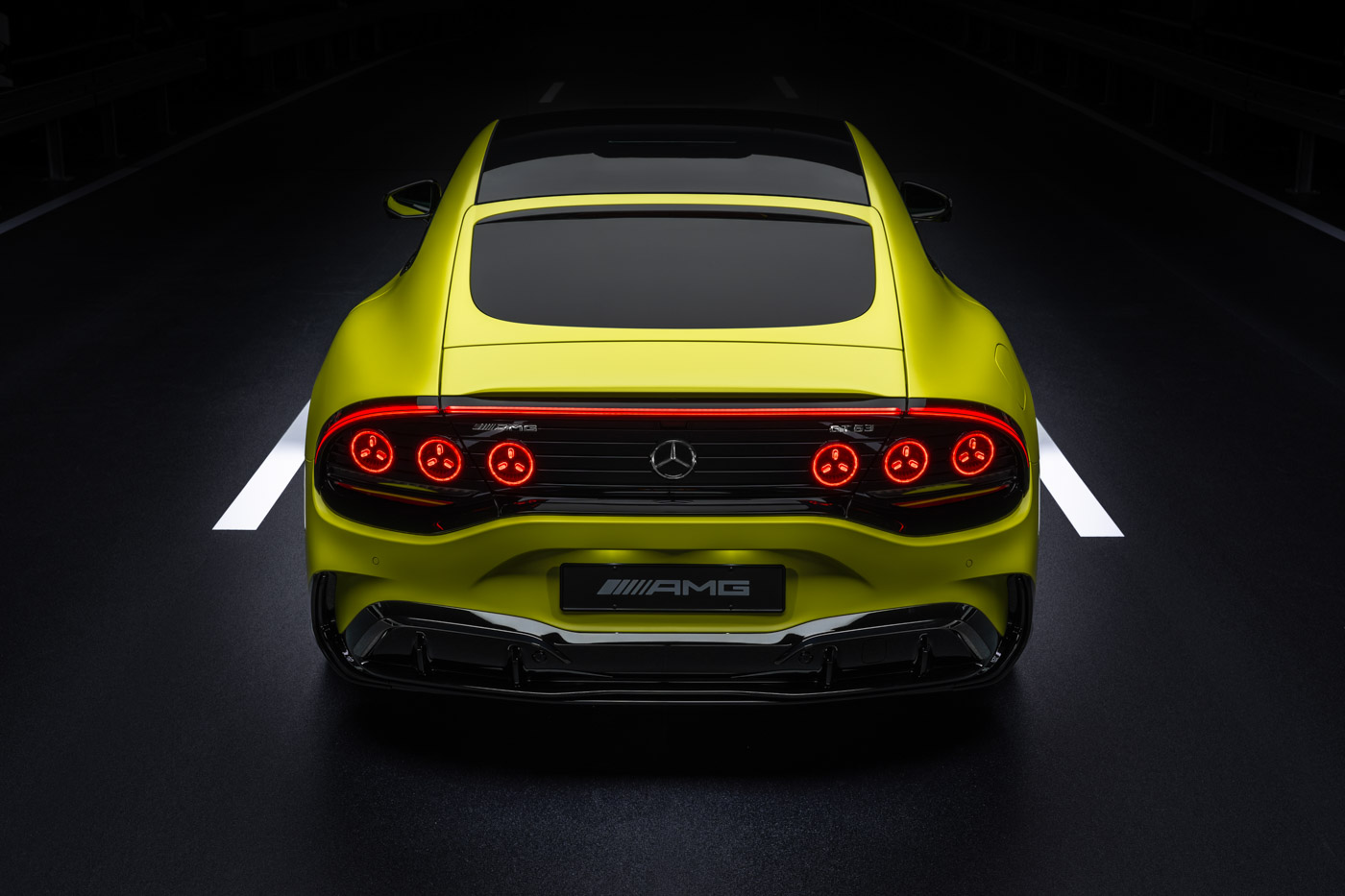
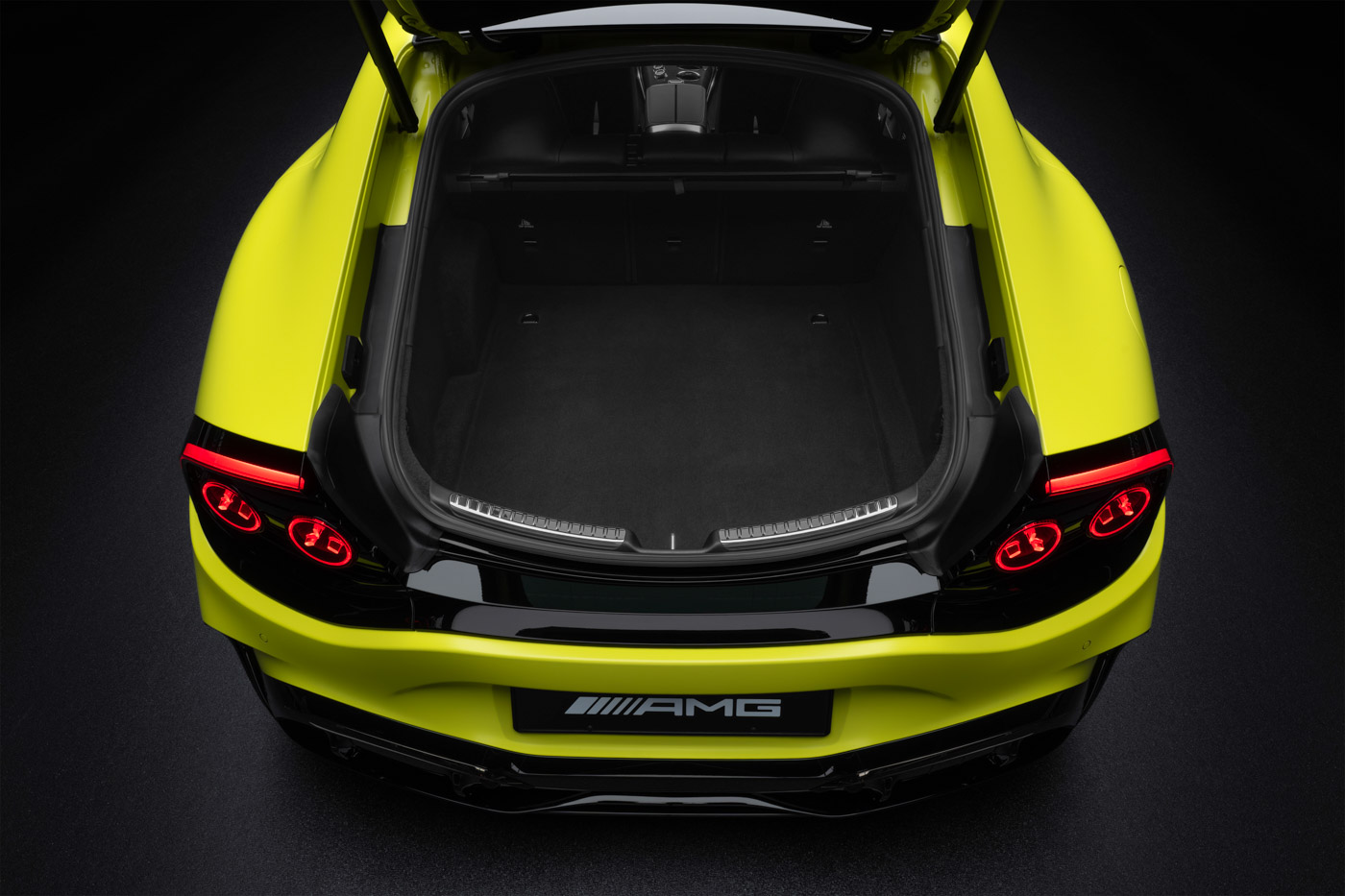
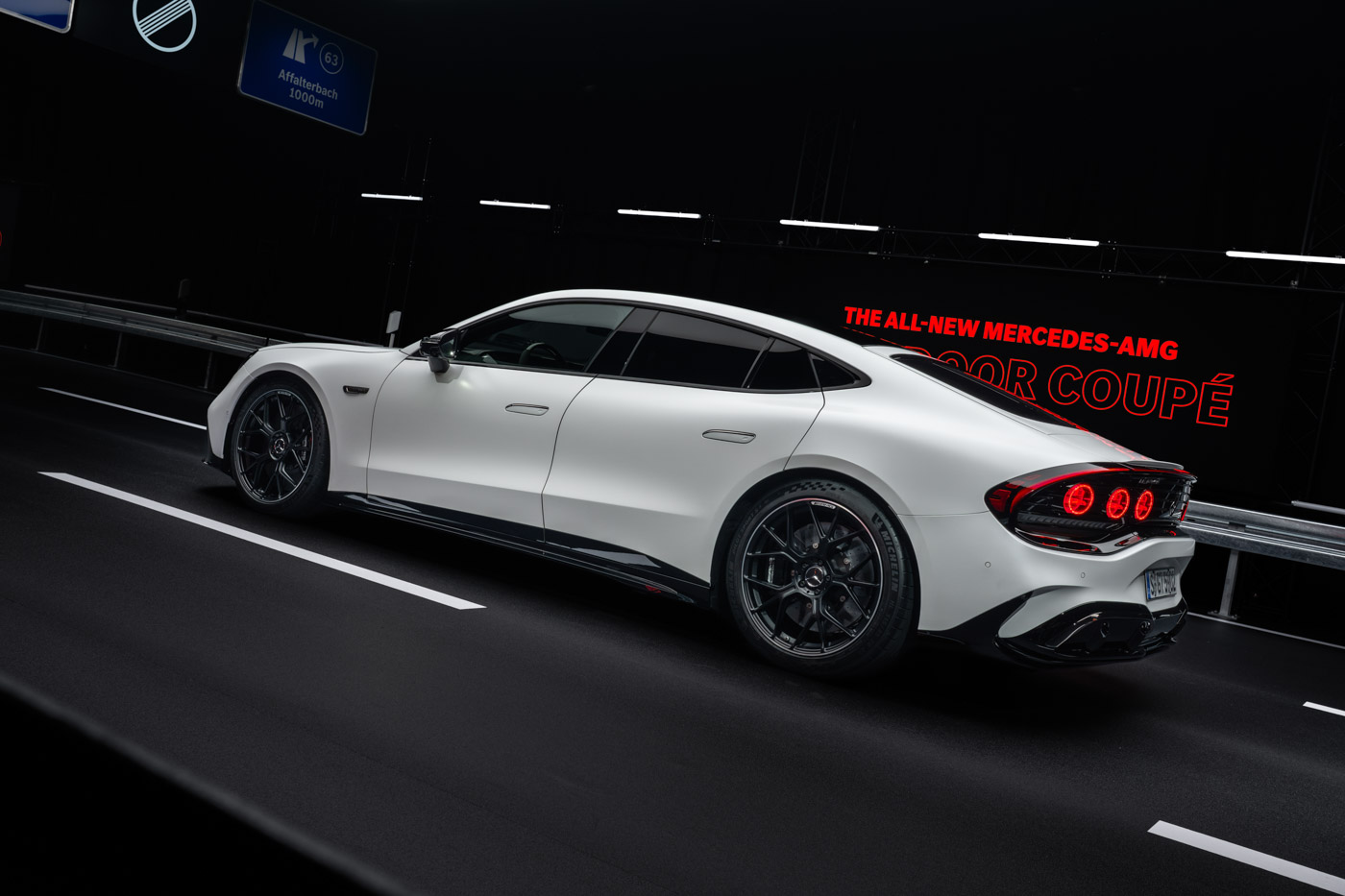
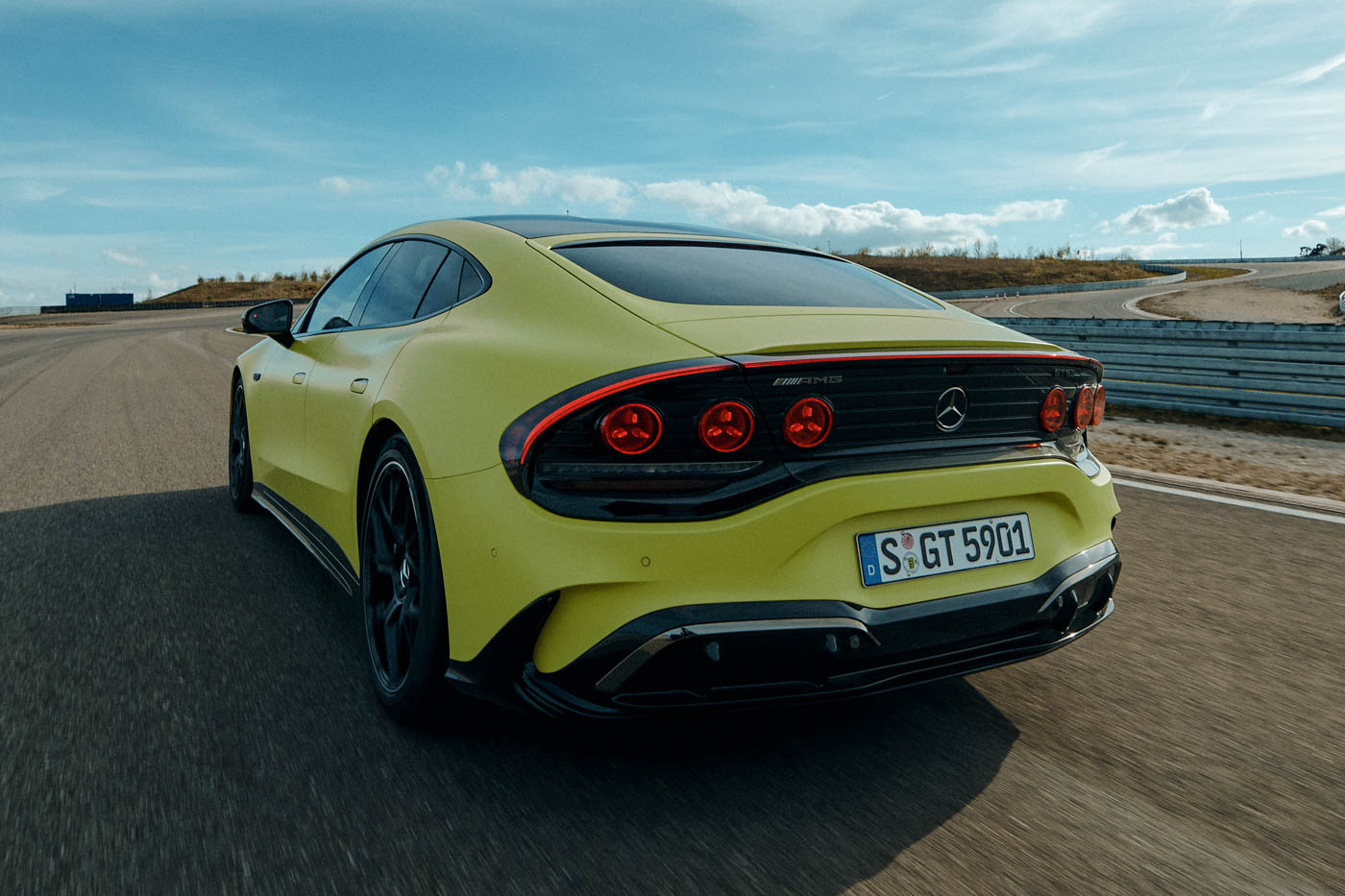
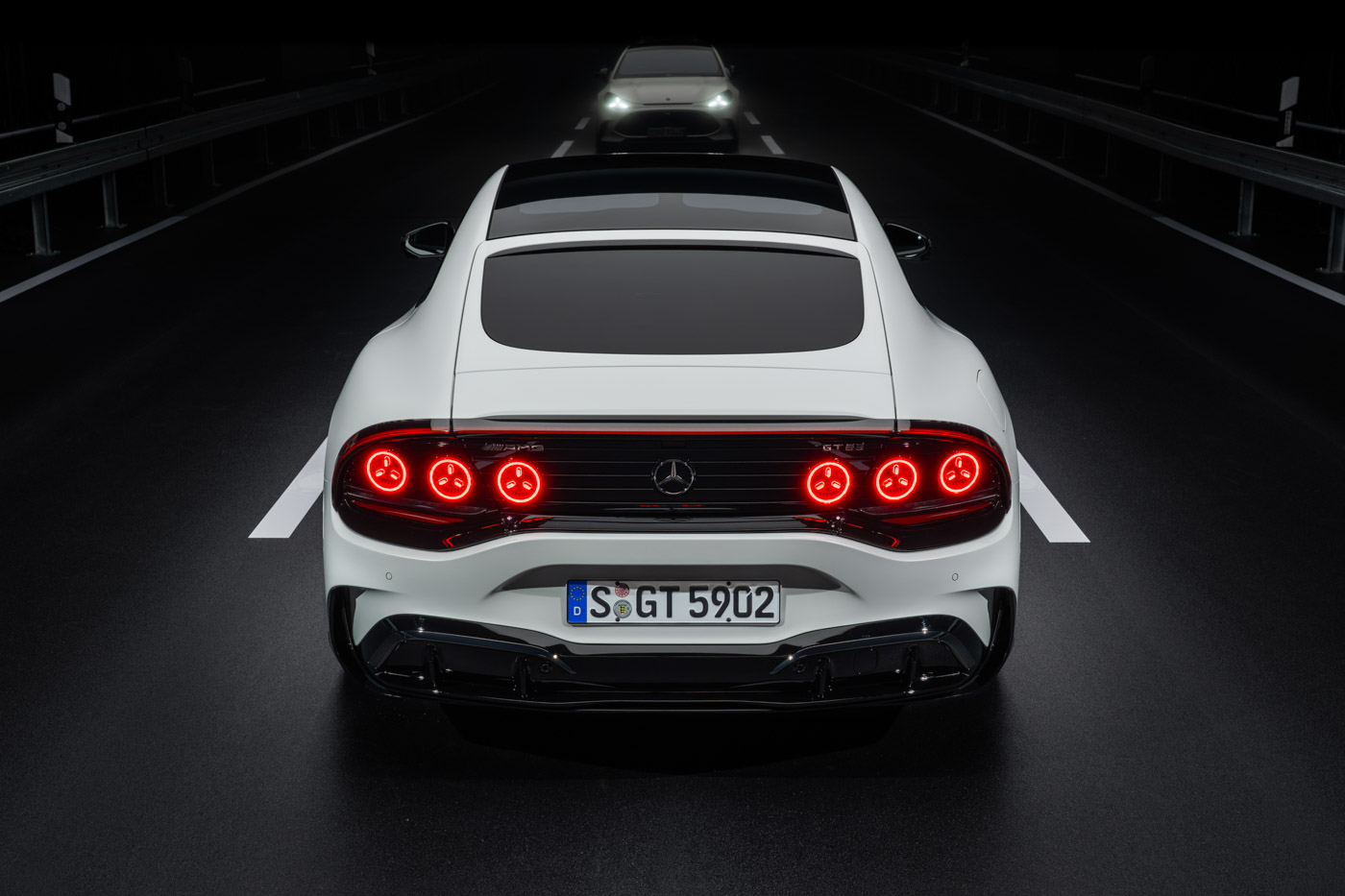
At the rear, things get even more… experimental. There are now three turbine-style taillights on each side housed within a giant black panel, alongside an eyebrow-esque light strip stretching across nearly half the rear fascia. Somewhere underneath all that styling drama is also a fair bit of clever airflow management.
The car features active aerodynamic elements including a deployable rear diffuser, adaptive rear spoiler, active underbody aero components and an upgraded AIRPANEL cooling system with active louvers. Mercedes-AMG says some wheel and tyre combinations can even improve WLTP range by up to 30 km thanks to aerodynamic optimisation.
Dimension-wise, it’s properly massive too, measuring 5,094 mm long, 1,959 mm wide and 1,411 mm tall, with a wheelbase stretching 3,040 mm. Thankfully, rear-wheel steering comes standard, with up to six degrees of steering angle below 80 km/h to make manoeuvring this electric cruise missile a little less terrifying.
ALSO READ: The all-new electric C-Class makes a bold statement with its giant illuminated face
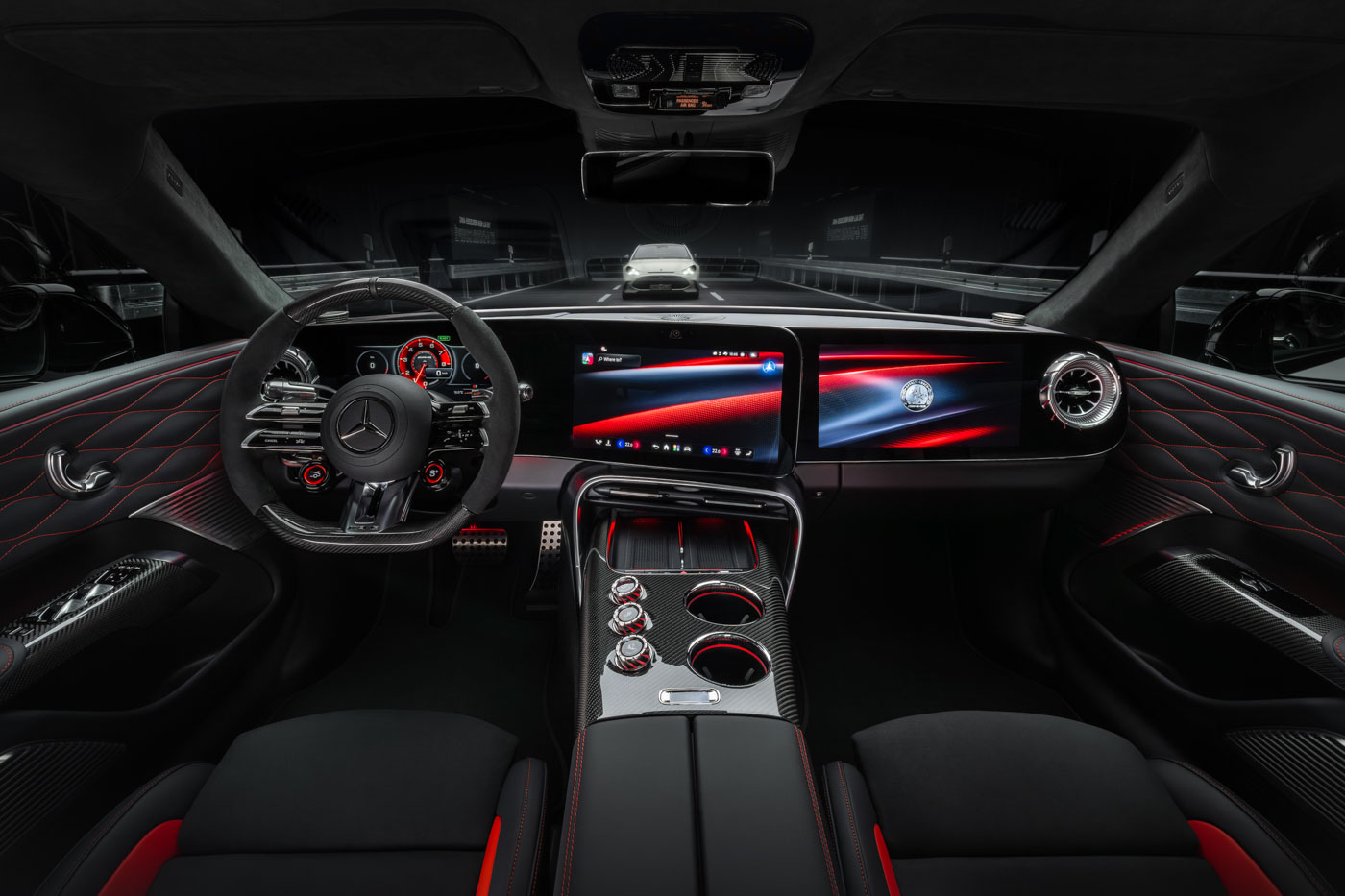
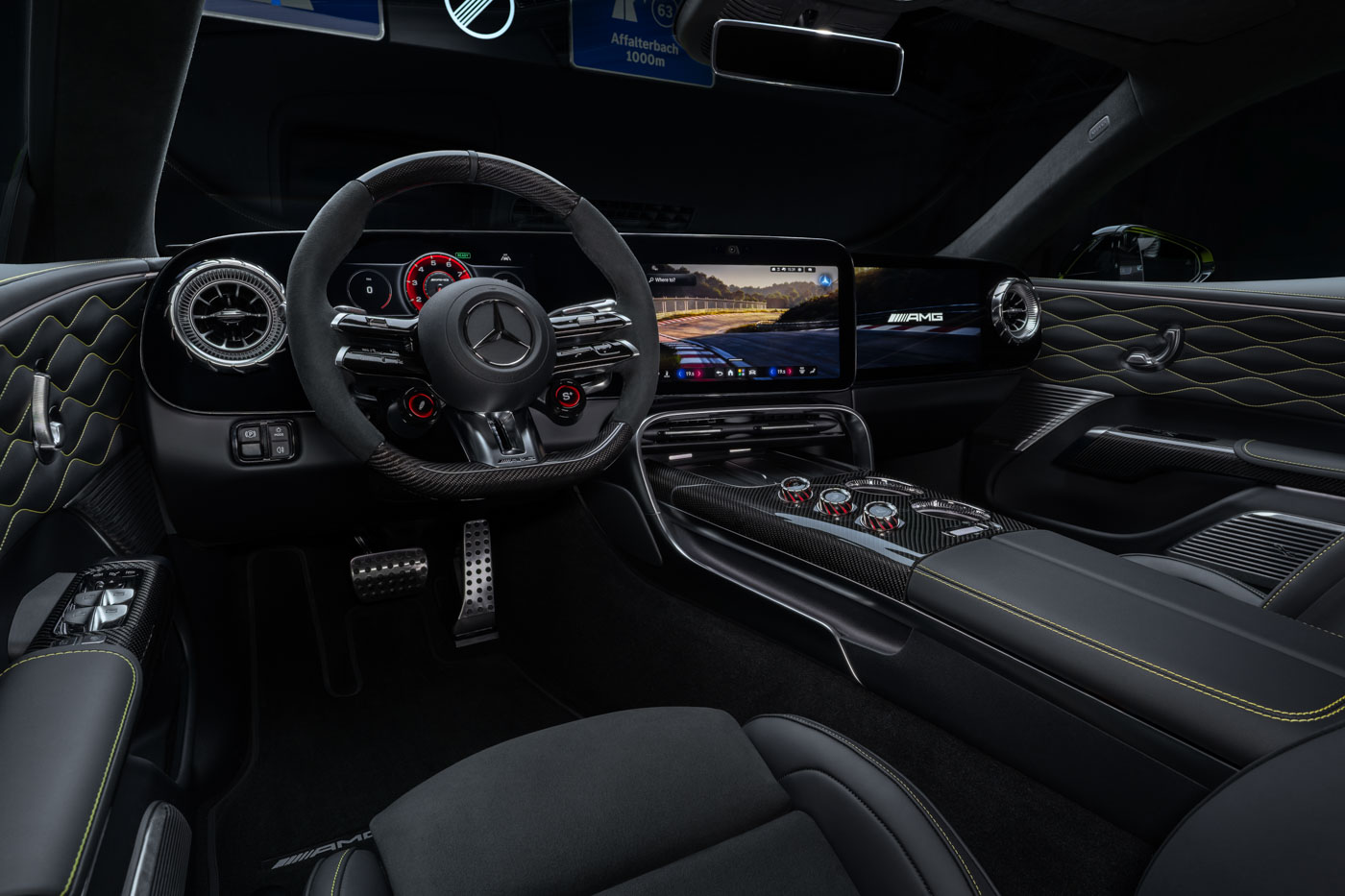
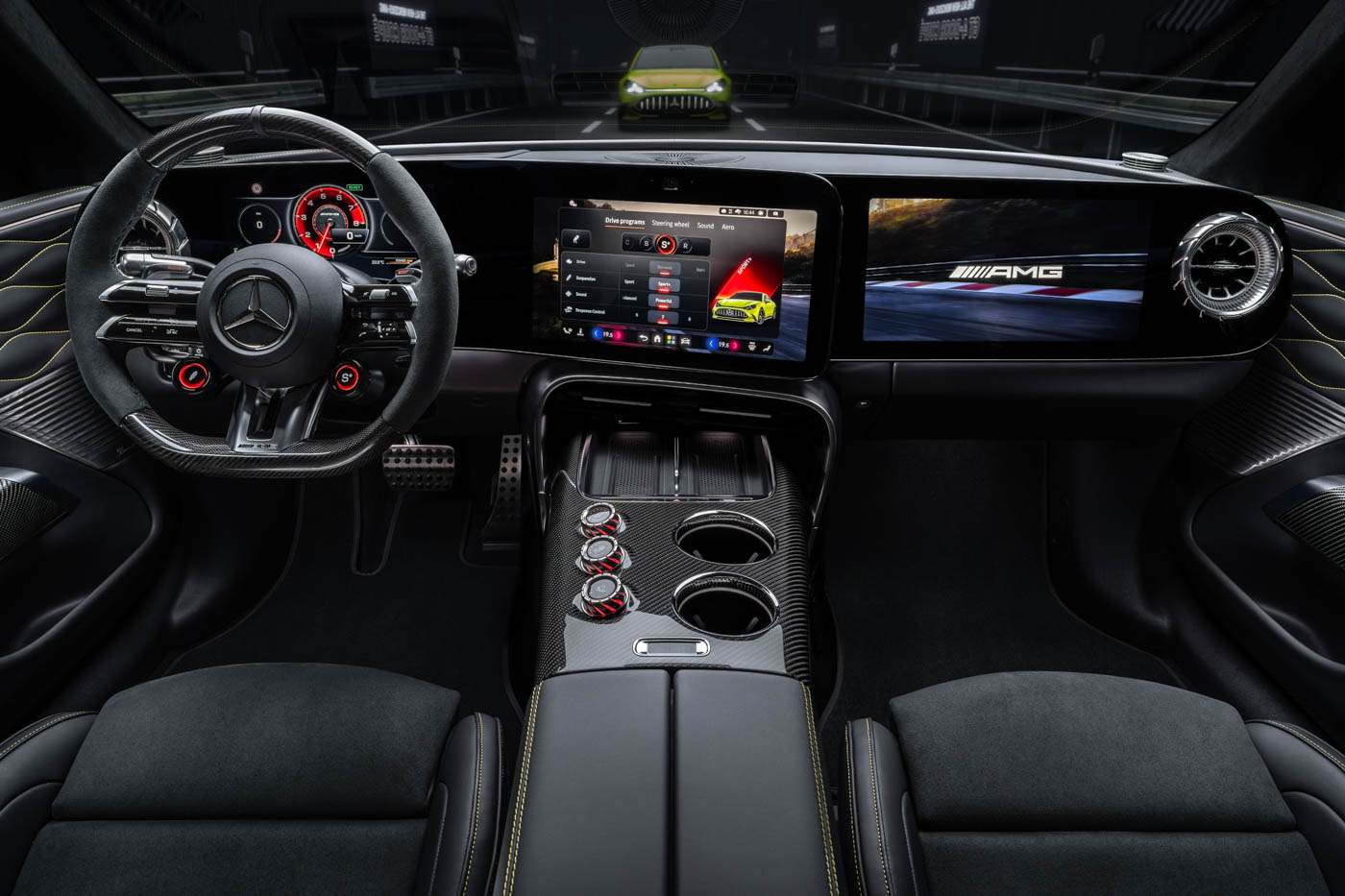
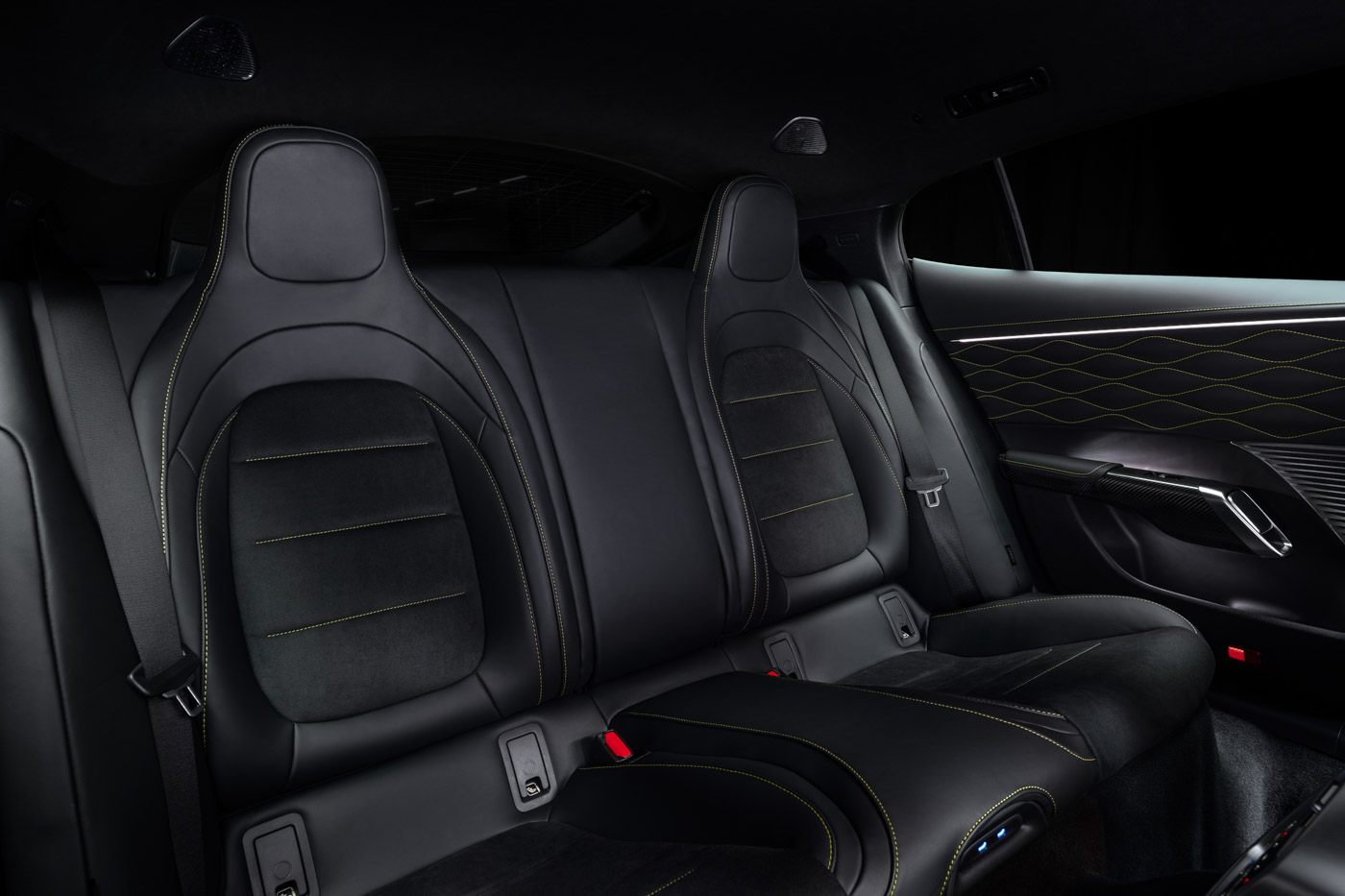
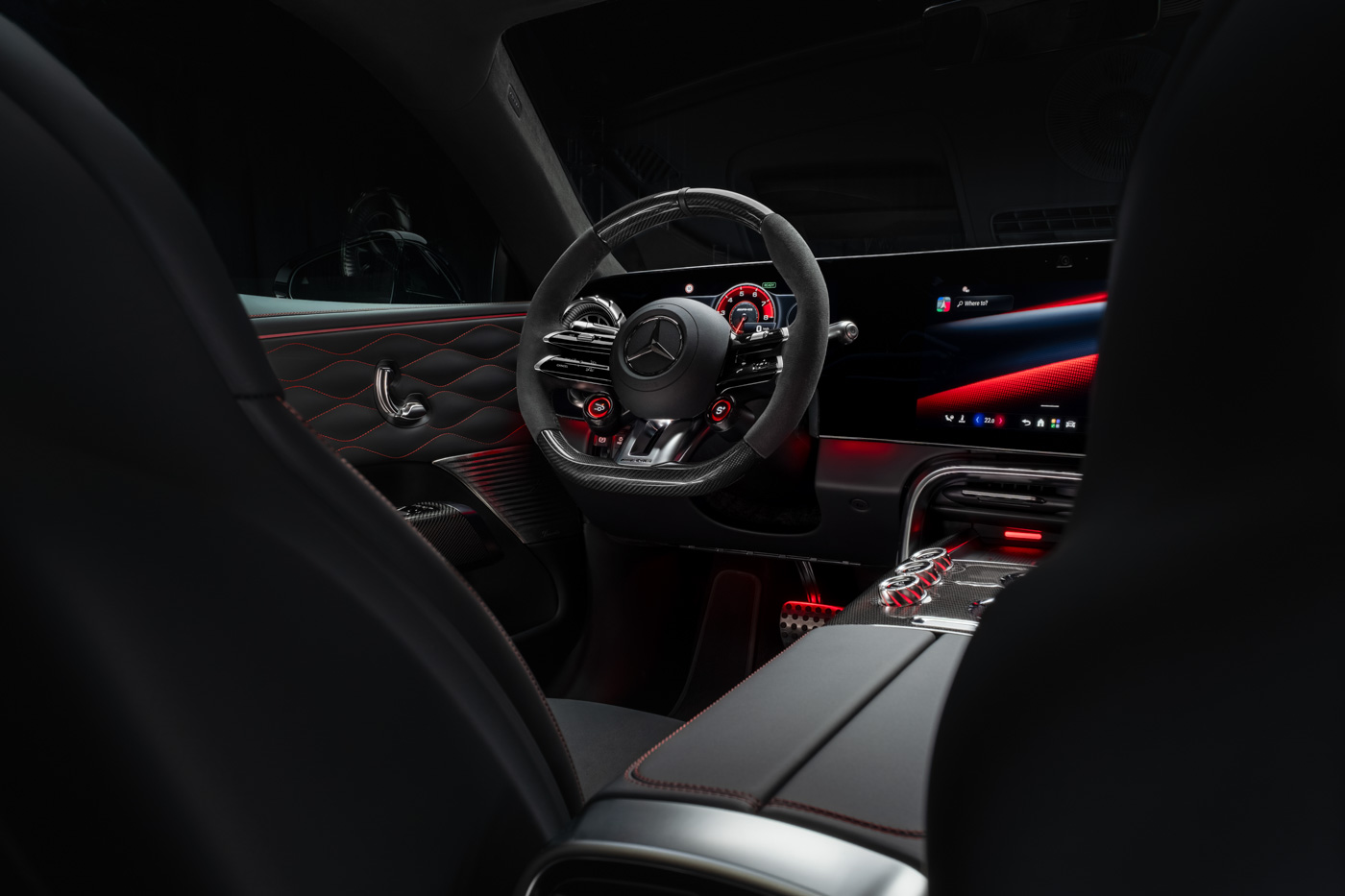
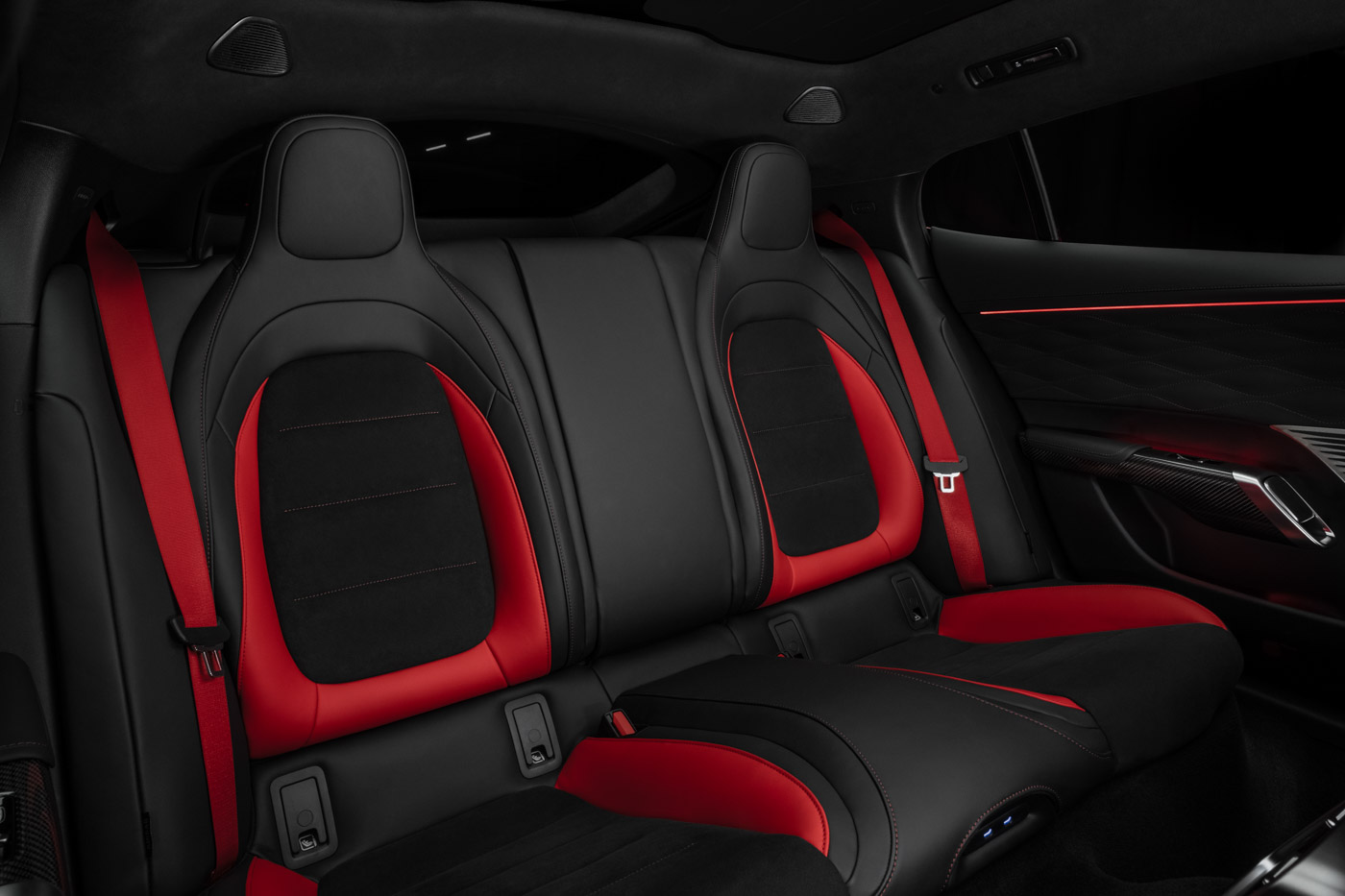
Inside, things are thankfully a little less controversial. The cabin adopts a heavily driver-focused layout featuring a 10.2-inch digital instrument cluster and a 14.0-inch infotainment display housed beneath a seamless glass panel angled towards the driver. A second 14.0-inch passenger display is also available.
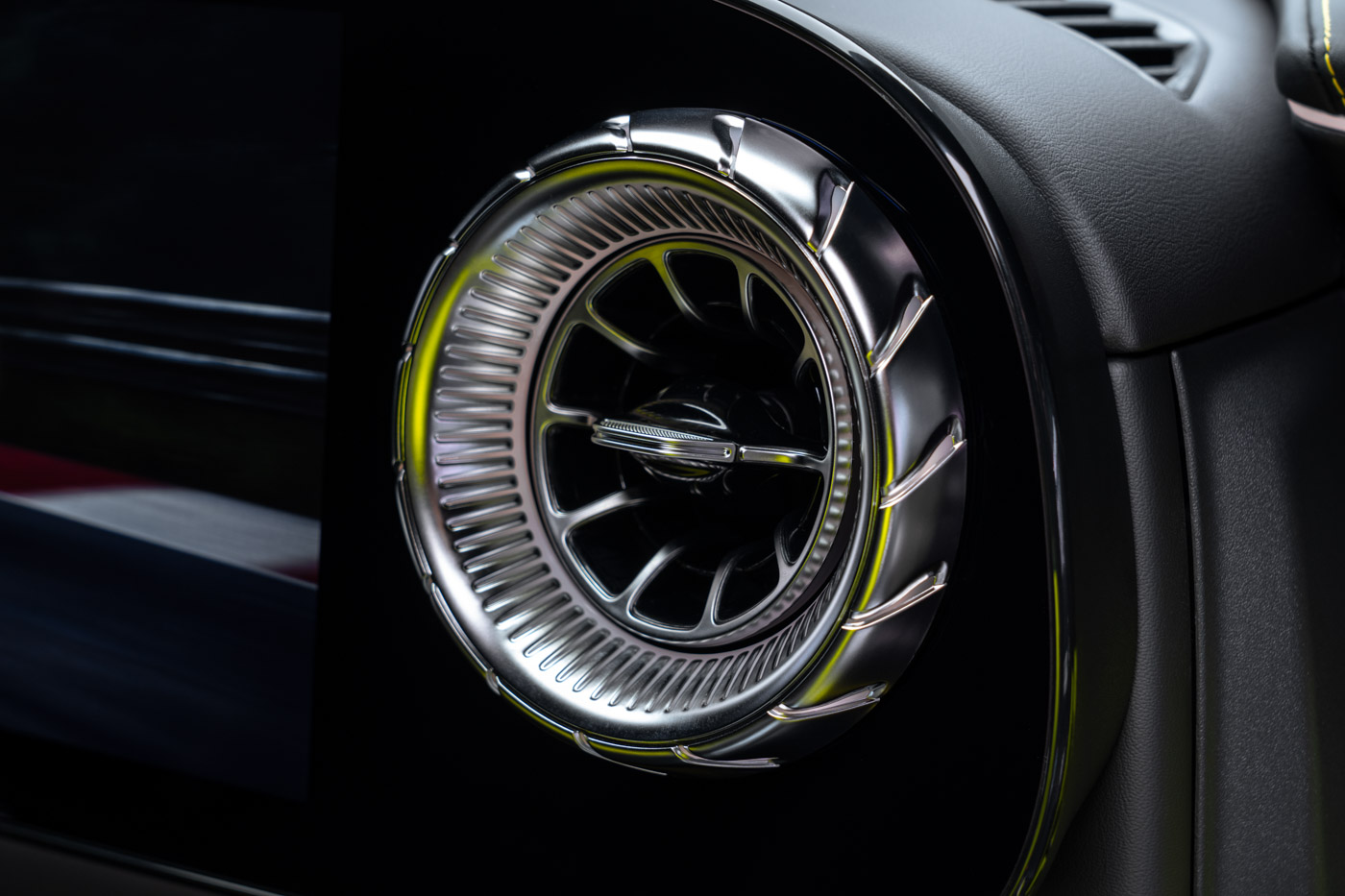
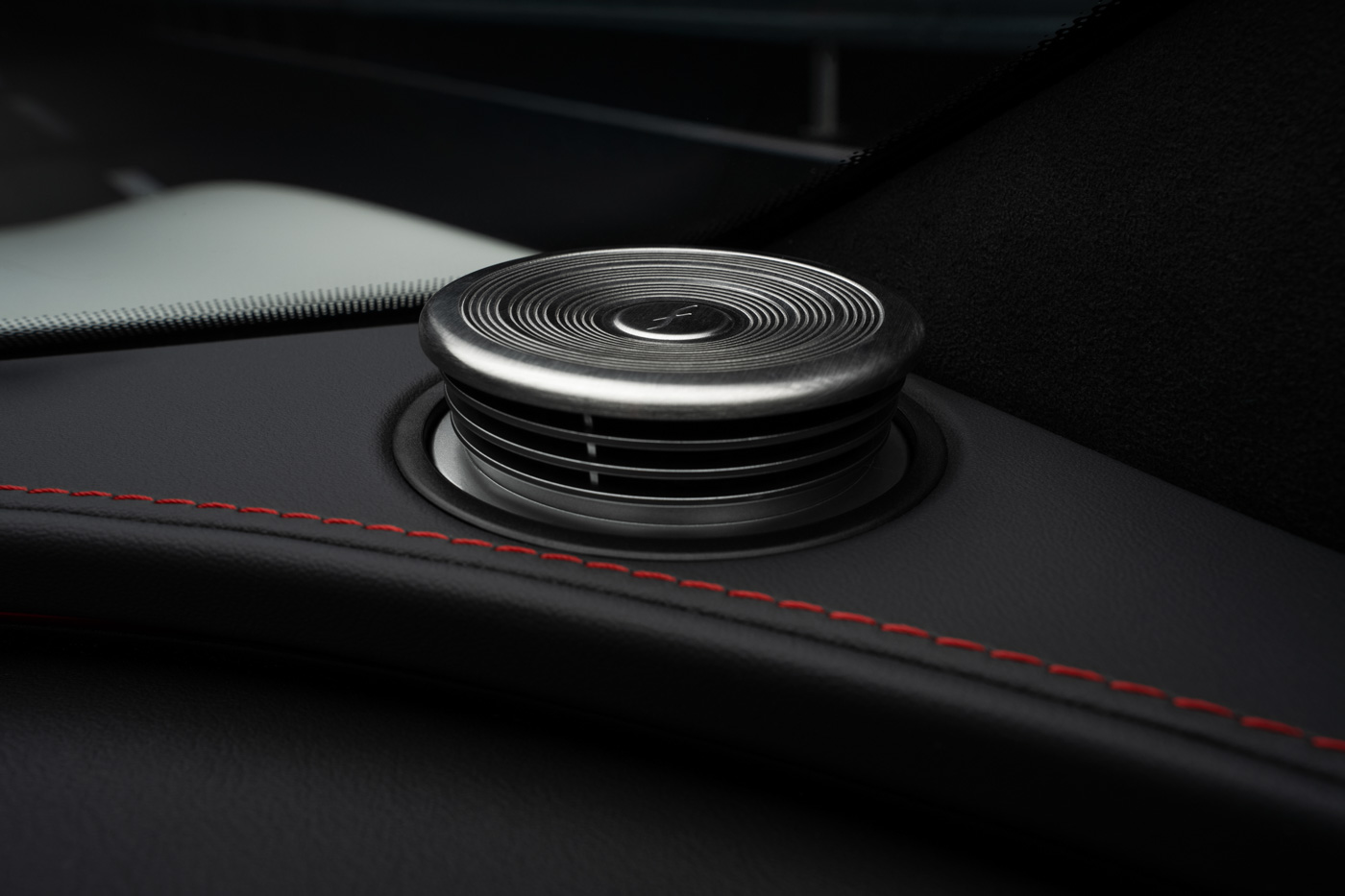
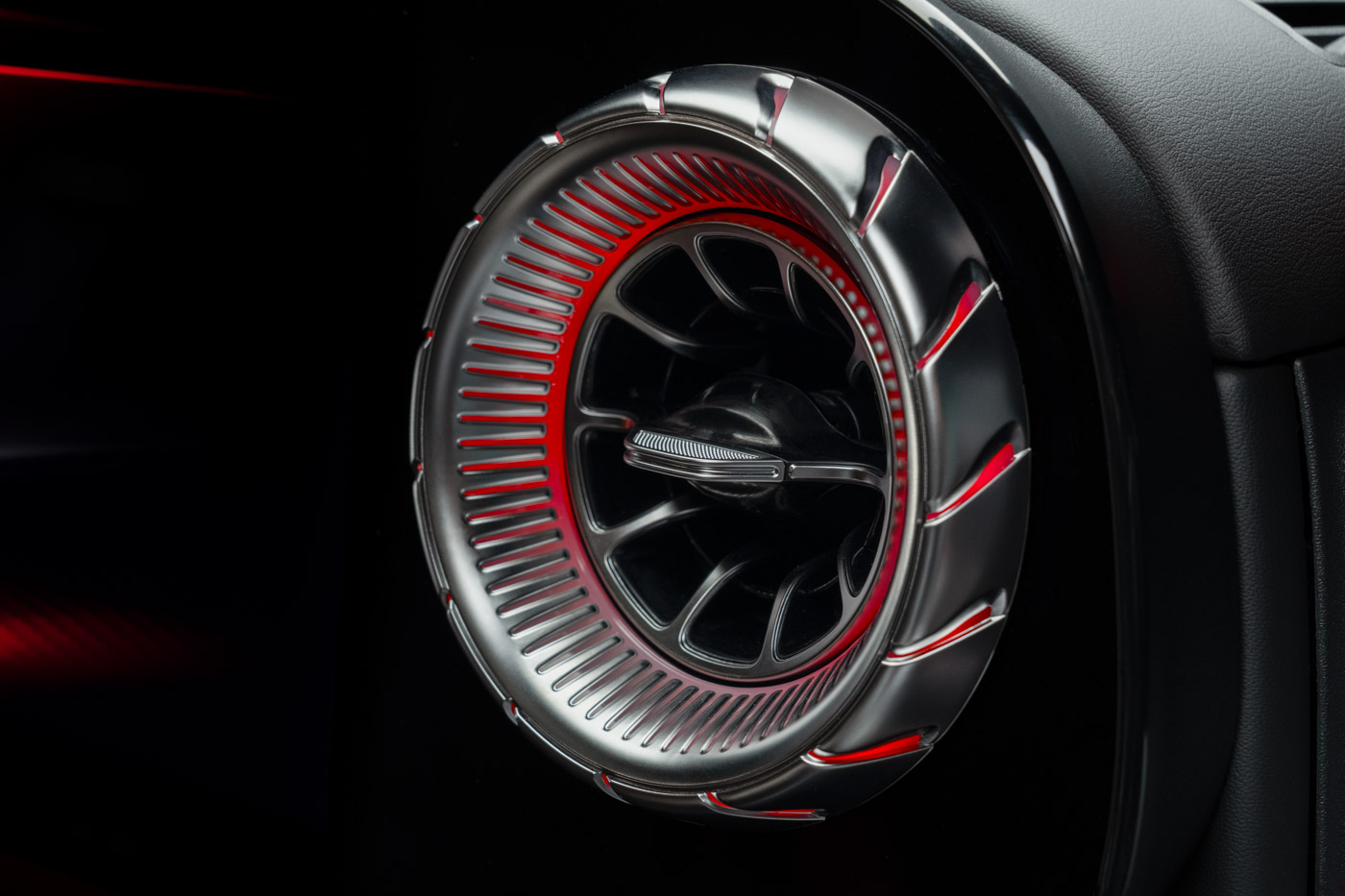
The centre console houses the AMG Race Engine rotary controllers, while also featuring wireless charging trays, cupholders and additional storage compartments. As expected from a modern Mercedes-AMG product, ambient lighting is also another talking point. Parts of the interior lighting now radiate through the thread of the rotary knobs and even around the rims of the air-conditioning vents.
The car also gets a panoramic glass roof extending all the way to the rear window. It can switch between transparent and opaque modes with individually adjustable sections, while infrared-reflective and Low-E coated laminated glass helps improve cabin temperature management.
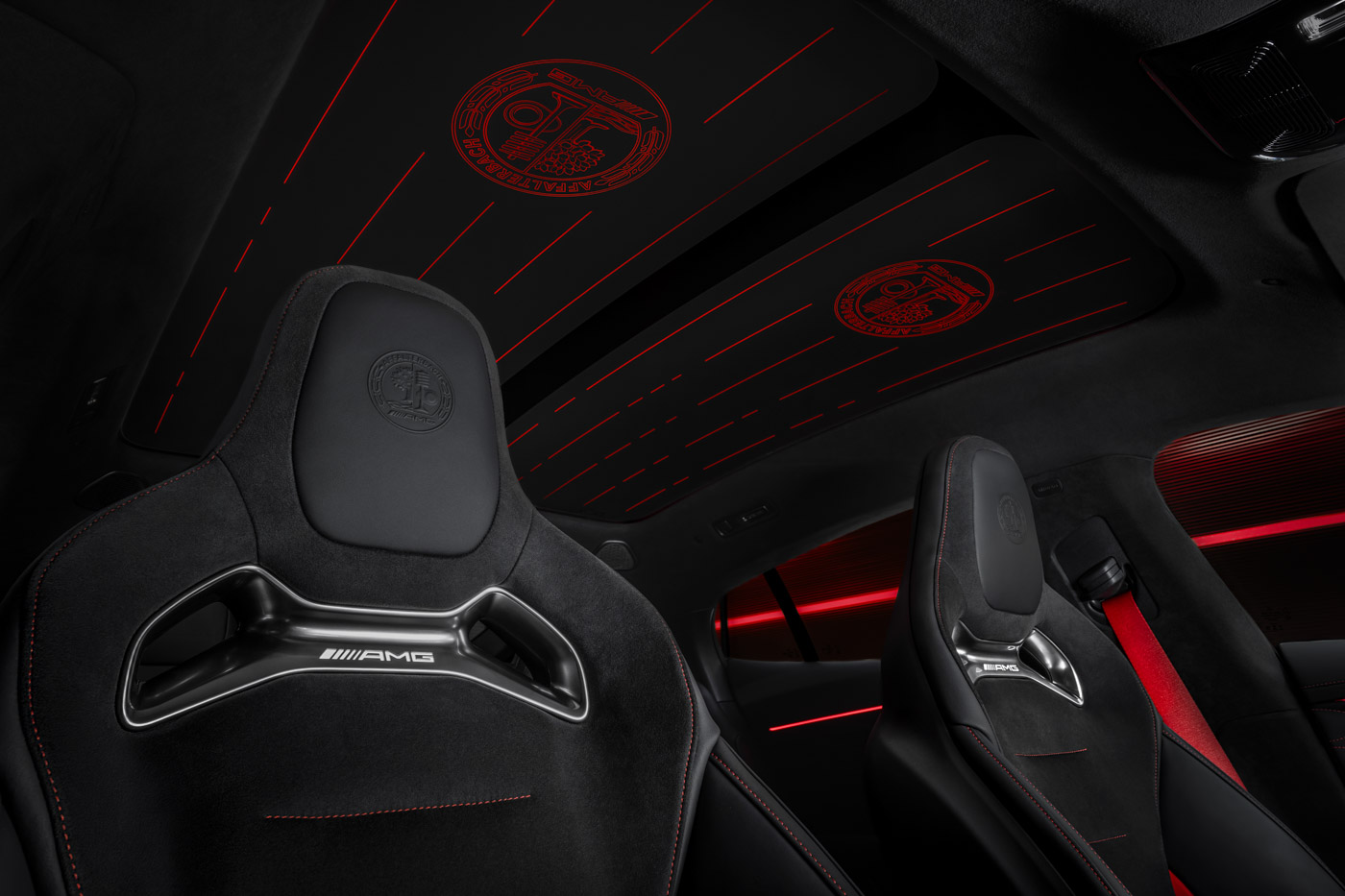
An optional lighting system can even project illuminated AMG crests and racing stripe graphics onto the roof at night. If that’s too flashy for you, an ultralight carbon-style roof will also be offered in selected markets.
Mercedes-AMG will be offering the cars in two variants at launch: Mercedes‑AMG GT 63 4-Door Coupé and the Mercedes‑AMG GT 55 4-Door Coupé. At least AMG finally decided to calm down with the naming convention. (for context, that read: Mercedes-AMG GT 63 S E Performance 4-Door Coupé). That honestly sounded less like a car name and more like a WiFi password.
ALSO READ: The Mercedes-Benz EQS update for 2026 may look subtle, but there’s plenty going on underneath