CATL might just make range anxiety irrelevant for battery electric vehicles (BEVs) while simultaneously previewing a future where extended range electric vehicles (EREVs) have more pure EV range than some EVs. The company recently announced the debut of its second-generation Freevoy hybrid battery alongside the third-generation Shenxing LFP battery at the 2026 CATL Tech Day, reported by Cnevpost.
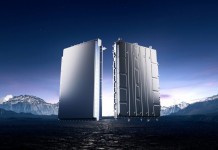
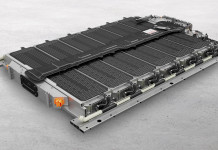
Launched as a “gradient-uniform” solution, the new second-generation Freevoy hybrid battery mixes LFP and NCM chemistries at a powder level. This enables EREV applications to reach a pure electric range of up to 600 km, with all variants supporting equivalent 10C ultra-fast charging as standard.

While CATL remains mute on exact capacities, it confirmed an energy density of 230 Wh/kg for the LFP variant. This represents a 20% improvement over conventional LFP units, allowing for a 15% range increase without any weight penalty. The high-end NCM variant provides the full 600 km of range, reportedly reducing petrol engine usage to below 1% in daily driving scenarios.
Despite its focus on efficiency, CATL states the Freevoy is a “megawatt-class” performer. Peak power reaches 1,500 kW at full charge and remains at 1,200 kW even at a 20% state of charge (SOC). Essentially, this ensures that even when the battery SOC is low, the driver still has full access to the car’s performance. This stands in stark contrast to a typical EV, where output is often noticeably reduced at low SOC, leaving the driver with a sluggish vehicle.
READ MORE: Aston Martin and Geely pursue a rather awkward court battle over wings

For BEVs, the third-generation Shenxing LFP battery takes charging speeds even further. It hits 10-80% in just 3 minutes and 44 seconds, outperforming BYD’s Blade 2.0, which requires five minutes for a 10-70% recharge. CATL also leads in extreme cold; at -30°C, the Shenxing hits a 98% charge in only nine minutes, whereas the BYD system takes 12 minutes to reach a similar level.
This record-breaking performance is driven by the world’s lowest internal resistance for ultra-fast charging, measured at just 0.25 milliohm, which is 50% lower than the industry average. Combined with a 20% improvement in cooling efficiency and an advanced heat management system, the Shenxing battery is reportedly able to retain a state-of-health (SOH) above 90% after 1,000 ultra-fast charging cycles.
ALSO READ: The Ferrari Luce is about to become the world’s most expensive four-door EV