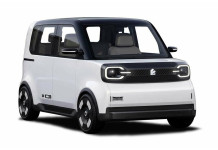
Chery has officially previewed the all-new Chery Q EV at the 2026 Bangkok International Motor Show, signalling the return of its iconic QQ nameplate in a bid for the electric city car crown. This subcompact hatchback is Chery’s direct answer to China’s best-selling Geely EX2, the international sibling of the Proton eMAS 5. Its regional debut arrives just after the market launch of the EV in China, as the Chery QQ3 earlier this month.
According to Autolife Thailand, three variants will be available with prices estimated between THB400,000 to THB500,000 (approx. RM49k–RM60k). This puts the Chery Q in competition against the Geely EX2, the Wuling Bingo, and the BYD Dolphin.

If the Chery QQ name sounds familiar, it’s because the first-generation model was launched in Malaysia in 2006. Priced at RM39,888, it competed against the Perodua Kancil and Proton Savvy, and was equipped with a tiny 800 cc engine producing 52 hp.
The third-generation model is a different beast entirely, swapping the petrol engine for a rear-mounted electric motor producing 122 hp (90 kW) and 115 Nm of torque.
ALSO READ: Thailand welcomes the bug-eyed Nio firefly that Malaysia can probably only admire from afar

Paired with a 42.7 kWh lithium-iron phosphate battery, the Chery Q claims a 400 km range (NEDC). Charging is handled via 6.6 kW AC or 85 kW DC, with the latter capable of a 30-80% recharge in just 16 minutes.
Measuring 4,195 mm long, 1,811 mm wide, and 1,574 mm tall, the Chery Q is physically larger than the Proton eMAS 5. Its 2,700 mm wheelbase is also notably longer, which should translate to a more spacious interior. While it maintains a high-riding hatchback silhouette, the cutesy oval headlights and taillights give it a friendly appearance on the road.


Inside, the Chery Q’s features include a power-adjustable driver’s seat, hidden storage under the rear seats, and a column-mounted gear shifter. The tech suite is dominated by an eight-inch digital gauge cluster and a 15.6-inch infotainment display with Apple CarPlay and Android Auto.
Safety is comprehensive, with a full ADAS suite that includes adaptive cruise control with stop-and-go, lane-keep assist, and blind-spot monitoring.

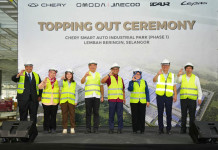
However, while the Chery Q looks like a compelling alternative to the Proton eMAS 5, the only real hope for a local debut rests with the RM2.2 billion Chery Smart Auto Industrial Park in Hulu Selangor. Scheduled for completion in late 2026, the facility will provide the local assembly (CKD) capacity needed to bypass import restrictions.
Chery is already locally assembling the Omoda E5, which in late 2024 became the first Chinese EV to be produced in Malaysia at the Inokom plant in Kulim. If the Chery Q follows suit at the new Hulu Selangor hub, it could challenge the eMAS 5 on home soil as a “Made in Malaysia” affair.
ALSO READ: Jaecoo J8 SHS-P debuts in UK with Chery’s PHEV tech
GALLERY