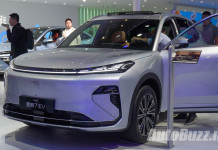
China’s Ministry of Industry and Information Technology (MIIT) has recently published the details about the upcoming Geely Xingyuan electric vehicle (EV). Following its initial approval by MIIT, more specific information regarding the model’s specifications and features has been released.
The Geely Xingyuan is expected to share technological underpinnings with the recently launched Geely Galaxy E5, suggesting similarities in platform, powertrain, and certain components. Tentatively named Paipai or Totoro, the model is scheduled for an August launch and will compete in the growing electric SUV segment.

The Xingyuan boasts a dimension of 4,135 mm in length, 1,805 mm in width, and 1,570 mm in height, underpinned by a 2,650 mm wheelbase. The vehicle’s kerb weight ranges from 1,215 kg to 1,285 kg. In comparison, the BYD Dolphin measures 4,125 mm in length, 1,770 mm in width, 1,570 mm in height, and underpinned by a 2,700 mm wheelbase.
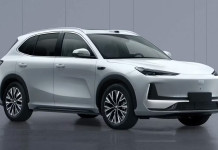
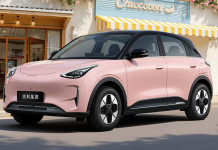
The Xingyuan adopts a smooth overall shape with a cute appearance and will be available in a two-tone or single-tone body color. It will also be offered with a variety of wheel designs, including four-spoke, five-spoke, and six-spoke options.
RELATED: Proton e.MAS7 unveiled, Malaysia’s 1st EV to be on sale by end of 2024

It is anticipated to share the same Global Intelligent New Energy Architecture (GEA) platform with the E5. This suggests the possibility of similar core components, including the 11-in-1 electric motor, Aegis lithium iron phosphate battery cells, Flyme Auto infotainment system, and independent suspension. Power will come from either a 78 hp (metric) or 114 hp (metric) electric motor, paired with 30.12 kWh or 40.16 kWh battery packs. It will offer a range of 310 km to 410 km based on the CLTC standard, depending on the battery configuration. It will have a top speed of 135 km/h.
Proton has previously hinted at a potential compact SUV model through a teaser image showcasing a side profile reminiscent of the Geely Xingyuan. Will the Geely Xingyuan have a right-hand drive (RHD) version, in addition to a left-hand drive (LHD) version? If so, maybe it has the potential to be a candidate for the second Proton e.MAS EV model after the Proton e.MAS7.
GALLERY