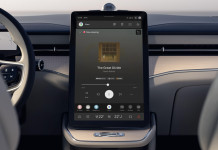
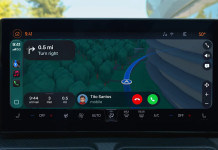
Have you ever wanted Apple CarPlay to do more in your car than it already does? Well, good news as Apple has just announced to the world the next generation Apple CarPlay at its 2024 Worldwide Developers Conference (WWDC), and it doesn’t only live on the infotainment display this time.
The next-gen CarPlay was first teased by the tech giant back in 2022, and now, we are really close to seeing it on cars’ screens. Aston Martin and Porsche have confirmed to embrace the new Apple CarPlay on their cars.

So what’s new with the next-generation Apple CarPlay? For starters, it will still rely on your phone (well, partially), but won’t need any cables this time. So yes, Apple CarPlay will be purely wireless moving forward.
As mentioned above, the new Apple CarPlay will not only be limited to just the vehicle’s infotainment display but will also be integrated into other displays, including the instrument cluster. It is also more deeply integrated into the car and can control functions such as the car’s climate control, seats, and even take over the speedometer.
RELATED: Here’s your first look at the full-car Apple CarPlay, to debut in 2024 with Aston Martin and Porsche

But since the new CarPlay is completely wireless, what happens when your iPhone disconnects from the car for some reason? To tackle scenarios like this, Apple will split the car’s various functions into “layers”, which some will run on the phone, and others in the car locally.
Firstly, there’s the “Remote UI” layer which runs on the phone. It is pretty much like the current Apple CarPlay which contains functions such as maps and music streaming apps but can now be displayed on any other screen in the car.
The “Overlay UI” on the other hand runs locally in the car. It takes over features like the turn signals and odometer. Apple is also allowing carmakers to customise how these elements look, which thinking about it, hasn’t exactly been an Apple thing. What an interesting time we’re living in, isn’t it?

Next up is the “Local UI” which controls functions like the speedometer and tachometer. Like the “Overlay UI” mentioned above, Apple also allows carmakers to customise how the gauges look, and will also provide them with various styles, from digital to “analogue”. Carmakers can even integrate their logos into the gauges. The only thing the companies can’t change is Apple’s San Francisco font.
At this point, some carmakers might worry that Apple is having too much control over the car. To address these types of concerns, Apple has also introduced the “Punch-through UI”, allowing carmakers to integrate their own interfaces with CarPlay. This includes functions such as the car’s reverse camera screen, advanced driver assistance system (ADAS) functions and so on.

Despite Aston Martin and Porsche’s commitment to using the next-gen Apple CarPlay, you won’t be able to find any real-life examples of the software just yet but rather renders released by Apple. Aston Martin said the new CarPlay will appear on its cars like the DB12 and DB12 Volante sometime this year. The software will also eventually make its way into cars from Mercedes-Benz, Nissan, Jaguar Land Rover, Volvo, Polestar, Honda, Audi, and so on.
Apple’s competitor, Google, also has the Android Automotive OS which is integrated directly into the vehicle. But unlike the next-gen CarPlay, you don’t need a phone to run the software, as it is an OS that can run independently on its own. Thus far carmakers using Android Automotive with Google built-in software include Volvo, Polestar, GMC, Nissan, Infiniti, and Honda.
RELATED: Proton’s next model to come with Apple CarPlay & Android Auto support – X70 facelift is that you?